
Interviewer: Can you introduce yourself and why you’re here?
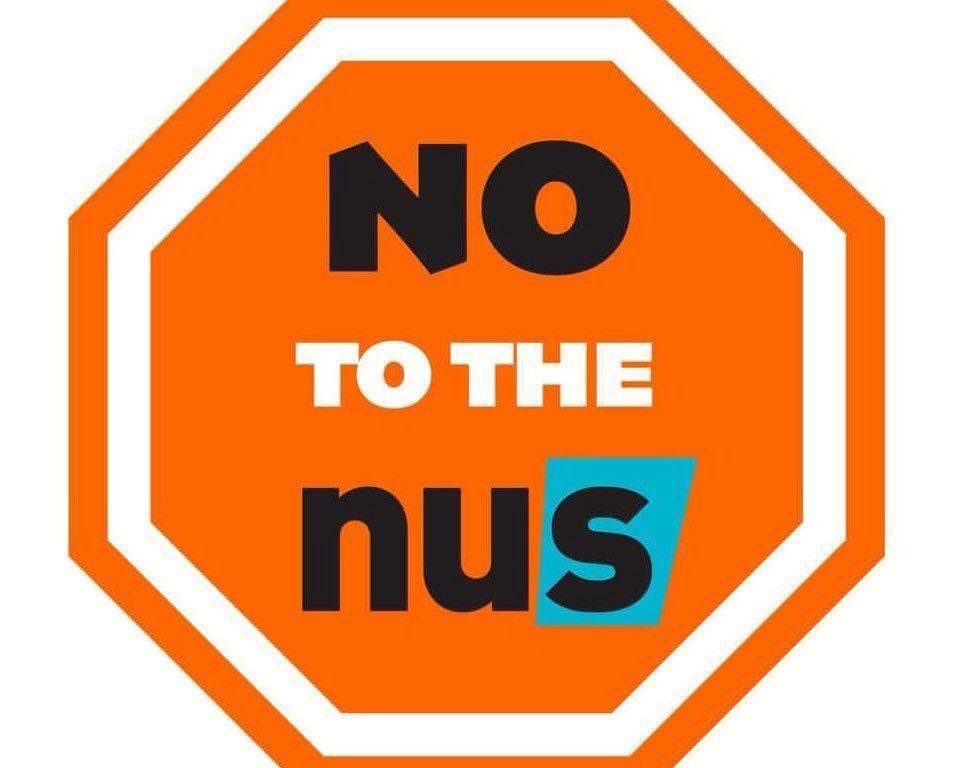
Jordi Blake: Hello, my name is Jordi Blake. I’m a first-year Politics and International Relations student, and I’m here on behalf of the campaign to disaffiliate from the NUS in the upcoming referendum.
Why should students leave the NUS?
Where should I start? Well, I think the main reason that our campaign wants to stress is, obviously, their response to all the ongoing protests against the genocide in Gaza; which is, namely, that their response has been very poor. So, for starters, there was a letter sent out that was co-signed by, I believe, 72 sabbatical officers and various different organisations. It comes to over a hundred, or something, different people and organisations that signed it in the end. And it was saying to the NUS: “Look, please, can you put out a statement saying, you know, how heartily you condemn the actions of Israel, and please support the protesters.”
And the NUS responded by essentially threatening to ban the sabbatical officers from various different NUS events, which, you know, I’d argue is a suppression of students’ right to free speech and to protest. I mean, this is a union that’s supposed to protect the interests of students. And if they decide, “Okay, no, we don’t like what you’re campaigning for, we’re not going to help you out,” and they did put out a statement, but it was very much sort of, very kind of neutral I’d say, and it didn’t really address really any of the things that the campaigners wanted them to say or asked them to help out with.
Do you think that the NUS should have taken a neutral stance on that? Because obviously not all students are going to be broadly supportive of that.
I mean, no, I don’t think they should have done. I mean, you know, no student, I agree, no student is going to agree on everything. But if you end up towing the line right down the middle as a union organisation, you’re going to end up nowhere. I mean, unions did not start and did not win all the victories they had, not just for students but for everyone across society, by saying, “Okay, we’re not going to, you know, tread on any toes.”
And quite frankly, I don’t think this is an issue you can be politically neutral on. It’s one of the great monstrosities of our age, you know, a country that is inflicting genocide and ethnic cleansing on a population supported by, you know, our own government and governments in the US and the EU. Yeah, I mean, it’s not something that I think you can sit back and say, “Okay, no, we can’t get involved, we’re going to sit on our hands and say, okay, yeah, we’re going to stay out of it.”
What are your main grievances with the NUS if you could just list those?
I mean, it has to, I mean mainly, I think it’s obviously their response to the protest, but also the fact that their organisation isn’t, you know, student delegates aren’t elected by students, they’re elected within. It’s not a very democratic process. And the response, I feel like I’m repeating myself a lot, but it really does come back I think mostly to the reaction to the protests.
As I say, you know, I am very strongly in favour of unions and all the work that they do. You know, most of the gains that workers have made in society have been won through unions. But there’s only one thing worse than having no union, and that’s having a union that’s not doing its job properly; that won’t go out and protect the interests of workers, of students. And they, you know, they left us out to dry. They hung us out to dry and I think, quite frankly, that’s something that I don’t really think I can forgive, and I don’t think anyone who’s been listening to this issue should either.
Are you happy that it’s just NUS UK that’s up for referendum, or would you rather it be the charity as well?
No, I think I’m happy that it’s just NUS UK. Because, obviously, you know I was at AGM, I heard the response in favour of remaining affiliated from Josh Tandy. And, you know, his main argument was, you know, the NUS provides student rep training, they provide discounts for other things such as, you know, the VKs in the Student Union. And I think, as far as I’m aware, the charity has not been affiliated with any of the union’s more political activities, and I think having those services is very useful for students.
And I think, you know, we should get all the good things out of that that we can. So I’m happy that we’re still remaining affiliated to the charity. It’s only really the NUS UK, the political wing, the lobbying wing that I have issues with.
Earlier in the week, I spoke with Deio Owen, the president of NUS Cymru. He did refer to the situation in Gaza as a genocide. Do you think that goes far enough, or do you think more action needs to be taken from the NUS?
I mean, I fully welcome that statement. I think he’s, you know, it’s the correct thing to say. It’s the only thing to say. This is something that’s been determined by various different investigations of the UN, other independent organisations, as there’s a probable case of a genocide going on in Gaza. But I would say that word has to be matched by deeds, like concrete deeds. You know, coming out against, firmly against the actions of government and to say, “Look, there have been students that have been protesting, you know, at this university and others across Wales and the UK.” Say, “Look, you know, we need to come down on the side of the students.” You know, where were they when our protests are being suppressed by the university? I’ve looked it up, and I haven’t seen any sort of condemnations of our university’s actions against our own protest groups.
Would that be referring to the injunction against protest on university property?
It would. And that is exactly something that a union should be, you know, getting involved with, fighting on our behalf, trying to exact, you know, at least concessions out of the university; and again, they weren’t there in the hour of need as a union should be.
Do you agree with the IHRA definition of antisemitism used by the NUS?
No, I don’t. I think it is a very much so, as an interpretation, very limited. And those definitions of antisemitism could conceivably be used and, well, they have been used to weaponise against anti-Zionism and conflating it as the same issue. And that’s just not true. You know, antisemitism is a blight on our society, it’s a cancer in any form, and I strongly condemn that. But it’s not anti-Zionism. Anti-Zionism is being against the state of Israel and its actions that it’s taken, and it’s being at the moment, it’s being against genocide.
You know, I don’t see how being against a genocide can be antisemitic. And I’d say this, you know, in the case of any state that’s been ethnic cleansing against another population, you know, whether they’re Jewish or not. It’s abhorrent. So I think the definition, and how, quite frankly, has just been far too limited. And maybe, I don’t want to say intentionally, but whether innocently or not, that definition has been utilised in many ways to crack down on anti-Zionist voices. And that’s something that our campaign, I think is tried to draw attention to. There are various cases within the NUS; I could be here for hours talking about all of them.
Do you think leaving the NUS will harm collective bargaining?
I don’t think so. Because again, you know, collective bargaining, what our protesters were doing, and the NUS, you know, they weren’t there. They haven’t been there for protesters, for students, just here, but across the country. And I think it’s something that if we’re going to change things within the NUS, and this is the argument I heard from the sort of the pro-remain side, like, “Look, we have to try and change things internally.”
And I say, “Look, the system as they have it is broken.” It’s not working in the interest of students. You know, there have been many cases of discrimination and lots of, mainly Islamophobia, against students. And I think the only way that we can get the NUS to change its way truly is by moving from words to deeds, and that starts by disaffiliating. And it’s not just us that are disaffiliating, you know: Liverpool University has just disaffiliated, London School of Economics, Cambridge, I think, are the biggest ones. But there’s referendums going on at various universities across the country; Manchester I believe, Birmingham.
You know, I get messages and accounts following our campaign account every week from different universities. I believe Hallam SU, Leeds Beckett the other day I saw set up their own campaign. So I’ll say this to anyone who’s concerned that we will be left out on our own, and that’s to say that we are not alone and we have never been. And our campaign has a plan going forward in the future to work with those other SUs that have disaffiliated and try to form our own alternative, and at least direct the university to explore that option through motions in Student Senate and AGM, I believe, which we have tried to publicise.
You’ve talked about an alternative to the NUS. What would that alternative look like? How would you action it?
Well, obviously, we have other groups that are already set up, that are already in, Welsh student unions. Obviously we have our Russell Group membership, which is I’d say something that’s fairly influential. But these universities and the SUs that have already left the NUS I think have said in their campaigns they were pretty open to forming new alternatives, radical alternatives to the NUS. And in that way, we can set up our own group for collective bargaining, collective action.
And, you know, this isn’t something that is entirely a new thing. Around the tuition fees fallout in 2010, when the Lib Dems essentially sold out the young people they had won election off the back of their votes. And the NUS’s response under their president, Wes Streeting, whose name I’m sure you’re very familiar with, they didn’t do really very much to sort of try and fight back about that. And in the end, they sort of stepped back and went, “Okay, we’re not going to follow through with the idea of potentially trying to, you know, get those tuition fee ideas abolished.”
In response, many groups formed the National Campaign Against Fees and Cuts to try and fight against this. So there have always been campaigns that are working outside of the NUS. And having a body that, you know, is at the top above all the SUs is frankly not something that’s ubiquitous across the world. There are many countries that don’t have a central executive student union body; France is one of them. And so I’d say look, we can look to try and follow that model, and you know, form our own alternatives with other universities, with the groups we’re already in. And as I say, we’re going to try and get the university to follow along that path with motions that we’re already working on to be introduced at a later date if and when we disaffiliate.
Do you think leaving will damage one of the most powerful lobbying groups that advocates for students, or do you feel like they don’t advocate for students as well as they should?
To answer both your points, I would say that one, they don’t advocate for students as well as they should, and two, maybe leaving will damage them; maybe that’s potentially the point. To look at them, to make them look at themselves and say, “Okay, all these universities are leaving, not just us, others across the country, as I’ve previously mentioned. They’re all leaving. Maybe we should look at ourselves and our own internal processes and say well why? Why is that happening? You know, why are all these people leaving? Why are all the SUs leaving?”
And say, “Okay, maybe we do need to reform our own internal processes. Maybe we need to set up something that’s fairer for all students and is going to actually fight on their behalf.” And, you know, leaving the NUS is not a case where we say, “Okay, we’ve gone, we’re out forever, that’s it.” There have been universities that have disaffiliated and rejoined, even in Wales; Aberystwyth, I think disaffiliated around in 2017 and they’ve gone back since. So it’s not a case where you say, “Okay, bye-bye, we’re closing the door forever.” It’s saying, “Okay, we’re out for now, but if you change your ways, there is a potential avenue where we could return in the future.” But that’s only if they, you know, really try and sort out their act.
What would you want to see changed to see a route to rejoining the NUS?
Well firstly, I think obviously their position on Gaza, I think, really has to change. And to say, “Look, say firmly that, say ‘We are an anti-Zionist organisation, we have a firm commitment to that.'” Many student union groups walked out of AGM conference in November when they refused to commit to that. And so I think that would have to be first on my list.
But also just to reform the process for students, to make elections of NUS delegates more democratic, give them more choice for the students and really crack down on what I think has been a quite pervasive culture of Islamophobia that has spread within the NUS. And that goes right to the top. And this is something I want to address.
In 2022, the NUS ousted its own president, Shaima Dallali, for comments that they perceived as antisemitic, comments made in support of Palestine and the pro-Palestine cause. And she denied all this. It went to an internal sort of disciplinary tribunal, and before the result had even come out, they had briefed newspapers, at least two major news organisations, that “Okay, she’s gone,” without even informing her, without even telling her the reasons. And so she went to tribunal, and she faced horrible abuse; you know, racist, Islamophobic abuse for standing up for her beliefs that maybe a state shouldn’t face genocide by an apartheid state.
And the NUS spent a lot of money on this campaign. The Times did an investigation around this and they found the NUS had spent at least in the region around £840,000 based on internal accounts. We think that it’s approximately around 1 million at its highest; the figures are a bit uncertain, they never officially released a statement saying how much they’d spent. It’s all very hush-hush. But they did, but eventually they settled out of court, and they released a statement saying that, “Okay, pro-Palestinian anti-Zionist beliefs may be protected.”
And incidentally, this is something that’s been confirmed in a more recent case, in Bristol University sacked professor David Miller, I believe, is his name, and he sued for wrongful dismissal, won, and the court ruled that anti-Zionist beliefs are protected under the Equality Act 2010 and as a process, you’re entitled to hold those beliefs. So, you know, the precedent is there. The NUS have already kind of said, “Okay, they might be protected, you might hold those beliefs.” Now they need to sort of come down and say, “Look, look, okay, look, we’re sorry for our past actions, we were wrong, we are an anti-Zionist organisation.” That I think is one of the conditions I think that would satisfy a potential return by this university.
Do you think enough students at Cardiff know about the referendum?
Not at the moment, no. And I think that’s something we really need to change. Because no, I understand, I understand, you know, it’s enough trying to get people to vote in student union elections, but much more for leaving an organisation most people know about. If they know they exist, they’re like, “Oh, it’s just some sort of bureaucratic thing.” And I get, you know, for many years I didn’t really know what the NUS did either. And it’s only recently, in the months before we started this campaign, that I really kind of got a grip on what it is they’re doing? What is it they’re doing wrong? Why is it that we need to leave?
And that’s why I went up and did that speech at AGM. And I didn’t even expect to be the one doing it, but I was the one, you know, I was in the right place at the right time, and I went, “Okay, I’ve got to stand up, I’ve got to say something,” just in the hope that I can get the word out there. Not even in the hope that we might, obviously I hoped that we might vote to not renew our affiliation immediately, but going up on stage, I even said, “Look, I’m not expecting you to vote to disaffiliate,” and people surprised me. But it’s a very good surprise, don’t get me wrong.
And I think, you know, hopefully they can use that power of collective student democracy again and say, “Look, we’re not happy with this.” That’s why we have elections for, right? You know, we go and elect new vice presidents for all the different sabbatical officers and our SU president. And I say this is the same thing, you know, we’re electing a new path: either change away from the NUS or we say, “Okay, why don’t we just stay and see what happens?” I think that is really what I’m trying to emphasise here is that dichotomy. The answer is either change away from the NUS or not. And I think there’s only one way. You know, no movement gets anywhere by just saying, “Okay, we’re going to stick with the status quo and you know, maybe if we ask nicely they might change a couple of things to keep us happy.” No, we need decisive action. The only action I say is to step away, stay away from the NUS and say, “Okay, look, the ball is in your court, sort your shit out,” pardon.
I just wondered how you felt about the SU elections and the referendum being on the same week?
I think, well firstly, I think there are both positives and drawbacks. One is to say, “Okay, look, people are already out voting for candidates. We can put this on alongside it, and you know, people might just cast votes because they’re like, ‘Okay, I’m already voting, might as well do this.'”
But also, it’s also a drawback because they might not necessarily know what they’re voting for. And they’ll just see, because right the referendum question is, “Should Cardiff University remain affiliated?” And the question is “Yes, we stay affiliated,” or “No, we don’t,” and “No” is obviously what I’m campaigning for. And people might just look at that and go, “Oh, okay, you know, ‘Yes,’ we stay the same, I’ll just go for that, it’ll be the easier thing.” And so I think there is definitely an argument that we could schedule it at a separate time, to like really, you know, make the campaign for the election solely focused on that. But also I guess it could be difficult to get people motivated to vote in a completely separate time, so you know, there are always two sides to an argument.
And if you had the choice, would you have had it the same week as the elections or a different week?
I think, I think I, I think if I personally chose, I would have had it on a different week, just so people were like, “Look, this is,” because we don’t have referendums, we don’t often run them when they’ve happened in wider UK politics. We didn’t run Brexit alongside the general elections; we had them entirely separate times because they, look, the campaign is solely focused on leaving or remaining, as the case is here. Otherwise, I fear we could get obfuscated in “Oh look, here’s your SU president election, here’s your VP undergrad election, here’s your VP anti-racism,” and then they just say, “Look, here’s NUS, we’ll just stick that on the end so no one really notices.”
How have you campaigned so far, and how do you plan to campaign in the future?
Well, we’ve set up an account on Instagram, Cardiff No to NUS, which people can go and follow, where we’ve put up some useful information about the referendum, working with some other groups such as Cardiff Students Against Cuts. And just today we’re going to start, you know, putting up posters and the same as a Student Union president campaign, really. We’re going to get the word out and say, “Look, vote, vote ‘No’ on the 9th to the 12th,” you know, we’re going to get the message out everywhere. You know, I will, if I need to, I will walk into Yolo dressed up as a ballot.
I’d like to see that.
Not sure, I’ll see if we’ve got the campaign budget to get me all dressed up, and I’ll just, just sneak me in the queue, and I’ll start doing like a snap poll.
Will your campaign be endorsing a candidate for SU president?
I think it’s important to recognise that we as a campaign are separate from the other election. I think there’s a fear that if we go up and say, “Okay, we’re endorsing this candidate,” people will be like, “Oh, okay, you’re just another campaign being run by one of the other candidates sort of try and push them towards voting for them.”
And no, this is not something that any of the candidates for any of the positions have set up. It’s a campaign that’s run by me and my co-leader, Gabriel. We’re not running for any positions. Obviously we have our own views independently as students personally outside of the campaign, and if you look on my social media, you can see who I’ve endorsed. I’m not going to hide that I have preferences towards certain candidates, or that other people in the campaign may have preferences towards certain candidates. But that does not affect what we’re doing when we’re campaigning.
One campaign has already reached out to us to ask for help on NUS policy; they know who they are. But what I’m saying, this is an appeal to all candidates really, you know, if you want to understand more about the campaign or be involved in the campaign or help out with the campaign or promote it in any way, you know, we’re free, you’re free to come and help out and put it up on your social medias or whatever. But that doesn’t mean we’re going to be endorsing you.
But this is, you know, a campaign open to anyone. We’re putting aside all political affiliations we have in the SU elections as a wider cause, and we’re saying, “Look, we extend the hand of friendship.” It’s what most people would probably call a united front. Regardless of what your positions are in the election, whether we agree with them or not, we’re saying, “Look, come and campaign with us on this one cause and if you want to support us in that, great.”
As a closing remark, could you pitch one last time your case for leaving the NUS?
The NUS as an organisation is failing the students it was set up to protect. In the past, it was an organisation that campaigned in the 1970s and 80s against the apartheid in South Africa; you know, most notably it got Barclays Bank to divest from the apartheid regime. So why now in the 21st century is it not campaigning against the Israeli apartheid regime, a regime that is committing genocide and ethnic cleansing against the Palestinian people? I mean, it’s a dereliction of duty.
And so to that I say that it’s time that we moved away from the NUS, said, “Look, you, you’re not coming out against one of the great moral crimes of our age.” And until you do that, quite frankly, why would we have anything to do with you? You have sold out our campaigns, you’ve not come to our aid when we needed you the most. So we’re going to step away. There are other universities that have already stepped away. We’re going to go and work with them, we’re going to build a whole new alternative. And we say the ball is in your court. If you want to make the changes that we want you to make, go ahead, you know, we’ve freely publicised our aims. And until you do that, I don’t see why we should return. We could do it in the future time, but at the moment it’s a broken organisation, it’s failing us, it’s failing everyone. So I say on the 9th to the 12th of March, go to your virtual ballot boxes and vote ‘No.’ Vote ‘No’ to leave the NUS for a better future for all students.
Thank you for your time.
Thank you.
By Oliver Hanlon