
Edited by Olivia Griffin
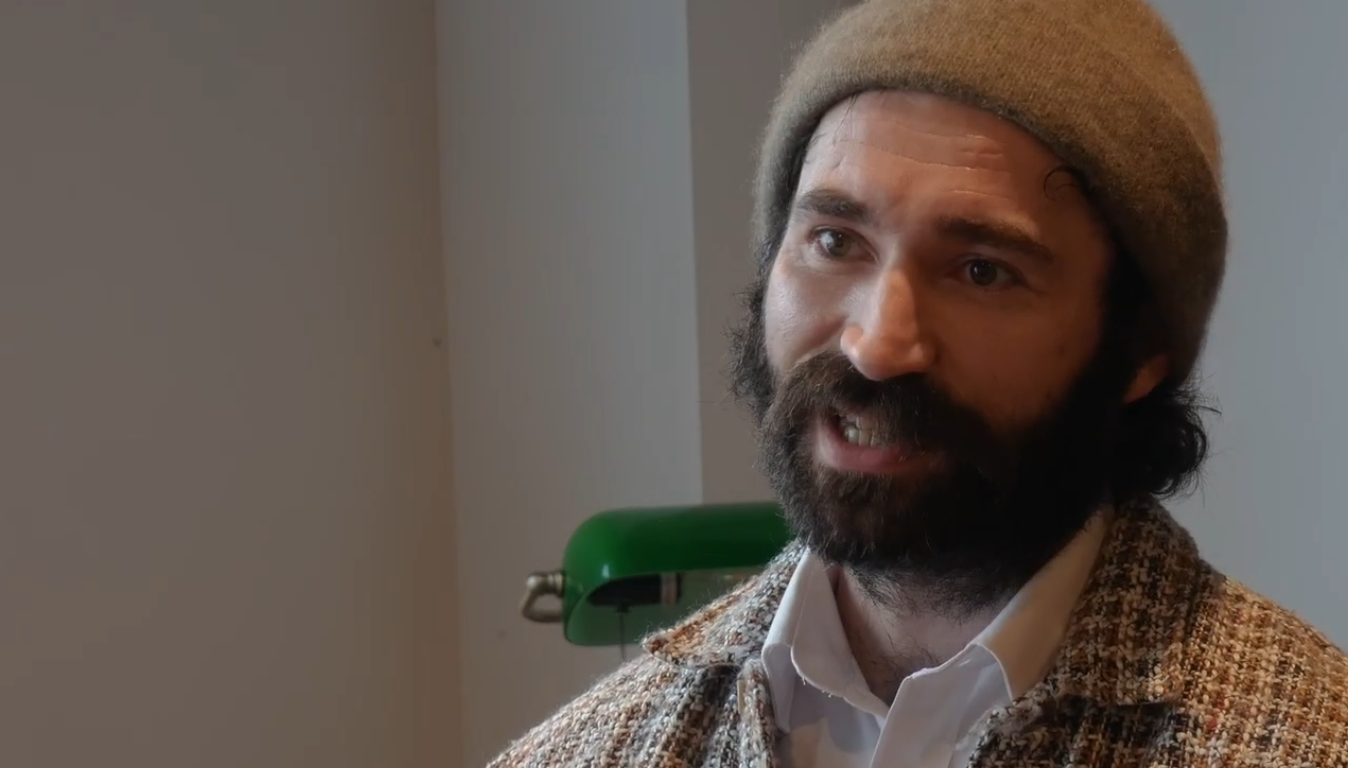
Callum Thompson discusses his 2026 Students’ Union Presidential bid with Gair Rhydd journalists Oliver Hanlon and Olivia Griffin.
Prefer to listen to this interview? Follow @gairrhydd on Instagram for more information.
This interview is published verbatim. Views expressed are those of the candidate and do not necessarily reflect the views of Gair Rhydd or Cardiff Students’ Union.
You’re a student at Cardiff University, what do you study or what have you studied?
So, I did my undergraduate in mechanical engineering with a year in industry, and that was the integrated masters course. So, that was basically a five-year course, and I did a placement in Meritor in Cwmbran.
And where did you grow up? What kind of school did you attend? Can you tell us a bit about your childhood and your teenage years?
So, to be honest, I had quite a nice childhood; I’ve got a very big family. I’m the youngest child: I’ve got five sisters and two brothers. So, I had a very big family and I loved that. I was brought up on a council estate in Newcastle, but to be honest, that was quite nice. I quite liked the sense of community that you find in them, in where I lived to be honest. And as I was growing up, I was very sporty.
So, I played rugby. I was on the England Euros squad at one point, and I wanted to be a professional rugby player. And I got injured when I was about sixteen, but I kept playing and I actually got an operation during my time at Cardiff on my shoulder. So, I kind of stopped playing then and focused a lot more on my studies and my career from then on. But when I was a kid, I used to get involved with everything: so, I was in like bands, I played guitar, and yeah, so.
And what was your school like?
I think they were just like very typical state schools really, like, you know, nothing fancy, but, you know, very pleasant I think. I would say that my secondary school was quite interesting: they were like sort of getting new buildings made. It was quite an old sort of school, but very much, you know, fine; I’ve no qualms with my time at school. I think they were more the simple years of my life.
And when you think about your life outside of university and studies now, what does that sort of look like? What do you do in your free time?
Well, when I was an undergraduate student, I was very much involved in, you know, what was going on in the city and sort of that kind of stuff. And at the start of my PhD, I decided that I wanted to live a bit more outside of the city and get a bit more involved in like the sort of Welsh culture and just to live a bit more of a more peaceful life. Because I think student life is really challenging and it does take its toll on you really: you know, moving away from home, having to look after yourself, it is, it’s a lot. And obviously I think that’s a big reason why the Student Union is important to safeguard and to help people actually thrive as well.
But yeah, so at the moment I’m doing a lot of gardening in the Welsh countryside. That’s my part-time job. So, I’m doing that at the moment, but in the second year of my studies, I was working for a medical engineering company in Llansamlet in Swansea. So, really I think I’ve been doing a lot of work, but I kind of have decided to take things a bit more easy recently and really focus on my mental health and and who I am. And I think the main way I’ve been trying to do that is by putting myself in the environment that helps us be the person that I want to be. And I’ve actually started playing rugby again.
So, I mentioned before that I had had some rugby injuries and stuff and had an operation in my early days at the uni, but I’ve actually started playing for Clwb Rygbi Cymry Caerdydd, so it’s actually a Welsh-speaking rugby team. I don’t speak very good Welsh at all; I know a few words and I can kind of start to pick it up from the lads and from the girls as well. We’ve got a very strong women’s team, and you know, that’s been a real experience for us just really kind of getting involved with the Welsh culture through that. It’s been amazing.
So, I don’t know if you know much about the rugby team, but it’s kind of set up for people from all over Wales, Welsh speakers who are in Cardiff, to kind of have somewhere to go to speak Welsh and to be a part of that. And you know it’s really interesting as an Englishman to be a part of that and to learn about the history more and about how the people are currently feeling. And you know, it’s been a real pleasure to like being invited to do that actually.
So, what was the, sort of, thinking behind joining a Welsh language-speaking club rather than a local English-speaking side?
Well, it, you know, actually, so my dad was down visiting, and I was in a coffee shop, and I was talking to, I met the head of the rugby club, and we were just having a chat. And you know, I kind of saying about how I was from Newcastle and I was down in Cardiff. And he was kind of just saying like, you know, you kind of fit the sort of point of the club, the only thing that you don’t fit is being Welsh. He’s like, you know, kind of like vagabond from Newcastle down in Cardiff, like, not really a big part of any groups as such. So, that was kind of how I got a foot in, and I think, you know, it was, it was lucky. It was lucky because you know they needed some players for the second team and it was kind of an opportunity where I could help out and they’ve helped me massively to be honest.
I can’t really thank them enough and it’s nice to be able to get an opportunity to talk about it actually. I mean, I, when I joined the rugby club, I was having a pretty difficult time in my life, and you know, it’s, the rugby club and the year that I joined had decided that they were going to have a big push for well-being and stuff like that. So, they’d kind of got a club therapist and stuff like that and I was kind of joining the rugby club as like, ‘god, I’m trying to like reach out’, be with a group of lads and stuff like that, and that’s exactly what it’s been for us. But also on top of that, you know, I’ve had access to like a therapist through the rugby team which has been instrumental really for me over the last sort of year and a year and a half for sure.
Thank you, thank you for sharing that. Do you have a favourite sort of social event in Cardiff? Of course you talked about your rugby team, but other pubs, a club, a society, anything?
Well, I think really I like going out in town. And I do, you know, like I like Lab 22 which is a little cocktail bar on Chippy Alley. So, I quite like going there; it’s quite a nice little place. But I used to love the Student Union on a Wednesday night; I used to go every Wednesday, mainly at the start of my studies when I didn’t have so much work to do.
And that’s undergraduate, when I was there like most Wednesdays, but I actually kind of stopped going out because I broke my jaw in the Student Union: well, I say I broke my jaw, someone else broke my jaw for us. So, that was an incredibly difficult time, so that was during my masters year. So, I think from November till the end of the year I was kind of working from home and then Covid started. And I think when you’ve gone through something like that you don’t want to be isolating like with all the Covid stuff, so it was a really challenging time.
Yeah. But you know, I definitely really enjoyed the sort of Student Union-led events I did. And I like doing sort of now, I like doing a bit of park running and stuff like that as well. I still like to go and party, but there’s definitely a lot more sort of well-being sort of events in there and they kind of like to put my focus on these things now.
What’s the story behind the broken jaw, if you don’t mind me asking?
Well, I think, well, how would I put it in the short term?
I think basically one of my friends was dancing with a girl; her boyfriend kind of came over, and wasn’t happy with him. They kind of had words, and then when the words ended, I kind of like got my friend and I was like, you just stay over there, and like got him, and then I was like in between the two groups. And then like I was kind of just with my friends: there was like a small group of us, we’d just come onto the dance floor in Y Plas.
Yeah, and kind of I was getting pushed from behind by a group of lads. It was after the Rugby World Cup final, so this was like quite late in the night. Very rowdy. Yeah, it was quite rowdy, and I kind of turned around, and like somebody was, basically there’s like a few lads, they were saying something. And I think the most honest way to say it is like I kind of asked them what was wrong, and he kind of squared up to us, and then I just pushed them away from us as hard as I could really because I didn’t want them anywhere near us. And then as I turned around someone else punched us from behind in the jaw and broke it in four pieces.
So, that was a really difficult thing to come back from and just to feel like myself again after it. I mean, you know, I think having an involvement in something like that you do question yourself a lot, like, why did that happen to me, like, is it my fault, and all that kind of stuff.
But obviously I never had any bad intentions in the situation, but I just feel kind of threatened and that kind of happened. So, yeah. But I’ve had two operations since the original operation and I’ve got a lot of metal work in my face. And it still bothers us to this day to be honest. Got a lot of nerve damage across here. So, that can be quite triggering and really set off your whole nervous system.
So, you know I really want to help people feel safe because I think there’s two different things about safety: one is being safe and protected, and the other one is feeling safe. And I really want to help students feel safe. And I really struggled with breaking my jaw in the Student Union because it was a place where I felt safe.
So, it was kind of like it meant that it was difficult to find myself feeling safe again in the university. So, anyway that was my masters year. So, I finished my masters, I went and worked in industry for a bit, did different things. I was actually when I first left and went home. I was actually my dad’s carer for about a year and a half. My dad’s got schizophrenia, and I’m quite open to talk about it as well because I think being aware of that kind of thing is really important. But during COVID he was really struggling and it was hard, and I also had a broken jaw at the same time and I was really struggling with that.
Like, with all the dentistry issues that were going on: you know, people were going to the pub but I couldn’t go to the dentist. And then I waited over a year for an operation during Covid, which was really difficult because it was like I had a, to put it in short, I had a, I needed a filling, I couldn’t get the filling for ages. And then I needed to get a root canal, and then they wouldn’t do the root canal in one session, so they were like do one root patched up, come back a month later, do another root, do that over three months. And on the last root they’re like, we can’t numb this root, there must be something wrong, you’re going to have to take the tooth out. And then we’re like, we can’t pull the tooth out because you’ve got a screw from your jaw plate going through the roots on the tooth. So, I had to get the plate taken out. So, basically I had toothache for about a year, which was incredibly awful, and at the same time I was looking after my dad.
Thankfully my dad has had all the support that’s available to him now and he’s doing really well with his mental health. I’d say he’s probably the best he’s been in my whole life on that side of things. And after that kind of what I would say episode of my chapter of my life I wanted to come to uni and then kind of have a bit of focus on myself and do my own thing. And then in my second year of my studies, my dad actually got diagnosed with idiopathic pulmonary fibrosis. So, I’ve kind of got that ongoing at the minute and like trying to balance things. So, like my life plan at the minute is quite complicated: you know, I’m not actually planning that far ahead. And yeah.
So, what drew you to sort of the conclusion that you’d like to run for this role?
Well, I think I feel like during my time at Cardiff University that although some things have improved, I don’t think Cardiff Uni has really kept up with other universities in some ways. You can see that in the league tables, like, Cardiff’s falling down the league tables quite significantly. Obviously we’ve recently had a lot of staff that have been made redundant. We’re coming back from Covid and all those kind things, and I think that they’ve caused a lot of difficulty for people.
And I would like to sort of help people feel more empowered again and be more involved in student experience. Because I think, I think like, you know, you come to university and you learn from books and online sources and all that, but, you know, anyone can really get access to that; you know, there’s libraries all over the place. But the student experience and that sort of developing that spark in people to be enthusiastic about something is what I think universities are good for.
And also I think meeting people from different backgrounds and different countries and all of this kind of stuff is so important, like, and I think it should be celebrated. Like, one of my main priorities is about diversity, and I really want people to feel like that’s something to celebrate. You know, if everyone was the same the world would be a boring place and we’d just probably end up going in the wrong direction anyway because people wouldn’t be questioning each other. So, you know, my view is that kind of diversity and difference in people is what kind of helps keep the balance. And I think if people have a positive attitude towards diversity, you actually bring out the beautiful parts of each other, and that’s kind of what I want to help do, and I want for to really celebrate difference more within the university.
And of course most students are only at Cardiff for three or four years. You have a very unique perspective of having seen what university is like, sort of, pre-Covid and post-Covid.
How will you ensure that you’re representing the priorities of sort of newer, younger students versus people like myself, yourself, who have been here a little bit longer or are a little bit older?
Yeah, so I think obviously for me, like, it’s very easy for me to say, you know, like if I went back in hindsight, like, what would you change? You know, I could, I could sit here and tell you all day, like, things that I would change, things that I thought were good, and you know, we could talk about that. But I’ve kind of had the experience. I feel like I’ve had the experience, and I think what matters is, is the new people having an experience, not necessarily the same experience as me or like not necessarily what I would say was a good experience. I want to help people have the kind of experience like that they want.
So, you know, I think obviously we’ve got the vice presidents in different sorts of roles representing different groups, which you know is really important, but also I would like to make myself very accessible. So, you know, having sort of like regular meet-ups where you know I’m just like, kind of, I haven’t quite decided how I’m going to do it yet if I get elected, but you know, kind of like open online sort of chat room or like a meet-up in the Taf or like something a bit more formal sometimes. It would be nice to have these kinds of events. But when there are events that the Student Union is involved in, I’ll make sure that I’m very visible and approachable at these events so I can talk to people on the ground. And that’s something which is really important to me.
And also like obviously the other candidates that are running, I haven’t really looked into too much what they’re standing for at the minute because I wanted to focus on actually having a voice myself because, you know, I might not get elected, so I wanted to share my thoughts. But I mean if I did get elected, that would be the first port of call for me would be actually to speak to other candidates, speak to old, old elected officials and to really dig into that side of things, and then obviously to to get out there and on the ground and talking to to different people. And I think, I think that’s generally it: it’s just being open and like having like authentic conversations with people but also um I think it’s also important that I show a level of like vulnerability from my experiences and be quite open and honest about things that I might have struggled with or stuff like that and let people know that you know like, it’s all right, it’s all right, like, we’ll get through it, we’ll have each other’s back and we’ll try and create that like positive environment for for everyone.
I think one thing that I’m quite passionate about trying to facilitate, I think it’s a bit of a challenge, but it’s actually learning about the minority groups which aren’t necessarily represented by vice presidents and stuff like that and like trying to represent them. I say I like represent them myself, right, but I don’t want to be necessarily just looking for minority groups and trying to represent them myself because I don’t want to misrepresent people. But I do want to help give people the stage to represent themselves and for me to sort of advocate for people to have that space. And if they want my support as well, then I’d be very willing to, kind of, work out how I can actually represent them groups.
But for me I think any sort of group that has a perception of vulnerability, I think that’s going to be something which I’m going to be really focused on because I think at the minute, you know, the way the world is, you know, there’s a there’s a lot of different views going around and and stuff like that. And I think before any sort of politics and stuff like that I just want to make sure people feel safe and comfortable to be themselves, and I think, you know, we’re here on a learning experience and people should be allowed to have that journey and that experience without being kind of shut down.
So, you know I do kind of want to make sure that like, you know, people can speak freely and stuff like that and we can have conversation, but I want to really try and help it be like positive, not, not kind of destructive conversation because you know I think that can happen quite, quite easily. And I also really want to try and have a way of sharing the help that kind of people have had in the university and like in an anonymous way so people feel like they can kind of reach out to services and get support and help in that. I mean for me being here for so long, like, I’ve used the services myself. Like at first I was kind of a student mentor and stuff like that and I was learning about all the services and what, what’s there through like the student mentor welfare officer like Active Bystander training. I think that Active Bystander training is more compulsory now?
I think they are trying to, I’ll have to find the direct quote, but I think by next year it’s going to be mandatory.
Yeah, so like I did, I did that training and for me it’s been really crucial. But some of the things that I’ve struggled with with it are actually like, an active bystander can help in the situation but when the situation’s ended it’s like quite difficult to help. And like I have reported incidents that I’ve witnessed before and the kind of comeback that I got was, ‘oh well, like the student needs to report it themselves’. And like that was really disheartening because I think you know when we’ve got students from sort of different countries and stuff like that, they don’t necessarily know the standards that we should hold ourselves to in Cardiff University, you know, in Wales.
You know and I think that’s really important that international students are treated with the same respect and dignity that Welsh students are, or any one that might represent us like British or etc. or western or however you kind of would view it. You know I’m um I’m really passionate about that. And also like I think that um you know it’s really in the university’s best interest for international students to have a good experience here, you know. We don’t really want disgruntled students; we want nice relationships where you know people are celebrating culture and helping people have the best of their culture.
I think at the minute in the world we’re seeing the worst of all sides and all cultures really. And we’re also seeing a lot of cultural destruction as well, like, heritage sites and stuff like that, and I think it’s totally heartbreaking. I want to be quite vocal about that as well because you know as a university we should be very inclusive and we should be making sure that people can not just be in a room but be in a room and like to be themselves. You know how they want to be.
And you know I think the person I was when I started university to now is very different. And I’ve had, I’ve had disheartening experiences, and I’ve also had, I don’t know the right word, heartening experiences. So, you know I think like there is a balance to find there, but I feel like the things that I’ve been most heartened about are just people taking the time to have authentic conversations with us and just be real.
So, you know for me I’m actually excited, I hope I can represent people in the Student Union position and to try and make some change. But I’m really excited to actually learn about people. So, you know if there is a new generation coming in, like, I want to learn about the challenges that they’re facing. You know , one of the things that I’m really keen to do is to learn about the problems that happen now and fix them before they spiral into bigger problems.
So I think for that to happen I need to be working in quite a live sense, rather than finding something out along the grapevine that happened months ago and then trying to put in big changes. I think often, as you say, a new cohort every year is going to have very different challenges to the one before.
One thing I think about, and I’m going to draw a comparison to what I imagine it would be like to be a parent, is that with your kids you can help them avoid the problems that you had quite easily. But they are still going to have their own problems. I think the university is quite good at thinking about past problems and how we’re going to solve them. But when there are new problems, I think the university doesn’t react quickly enough.
I think that is a big problem at the moment: reaction time. I really want to make sure that if things are raised that can be reacted to quickly, they get put on my desk straight away. Then I can get on my feet, talk to the right people, and make sure that change is happening straight away to help individuals or groups of people, if I can. That’s what I would really like to do.
Of course, unlike some other candidates in this election, you don’t have much of a public presence beyond your LinkedIn and coming in to talk to us. Is that a deliberate choice? How do you think students can best engage with you or talk about your campaign with you?
I was quite sad that the Q&A got cancelled because I thought students should have every possible chance to interact with us and ask questions. At the moment I’m trying to think about how I can create more opportunities for discussion. I will also be involved in the SU presidential debate on Saturday, and on Sunday I’m going to be speaking on Xpress Radio. If anyone has any questions for anything like that, I would definitely say to put them forward and I’ll answer as much as I can.
My LinkedIn is also there, and I’m more than happy for people to go on there. You can see what I’ve done in the past and what I’m pushing for in my day-to-day life. For me, I haven’t been working towards becoming SU president for a long time. It simply felt right at the time to nominate myself and push forward with it. I will be looking for more ways to be on the ground, and I plan to spend more time in the Students’ Union during the week next week. I would also be happy to work with you to put out a post saying when I’ll be around if people want to come and have a chat. I’m just working out the logistics of that. I am very approachable, and if people want to add me on LinkedIn and send me a message I’d be more than happy to have a Teams call, a phone call, or meet individuals or groups. I’m very open to that.
This kind of political environment isn’t something I’m used to. I’ve had a treasurer role with a materials society, which is an industry and academic materials society, but it wasn’t such a big population. The voting base was quite small. So it’s a work in progress, but there will be something and I will put it out there for people to get more engaged if that’s what they’d like.
Do you think the smaller-scale social media presence puts you at a disadvantage when it comes to winning the election?
I think what I’m trying to say is that I’m not actually trying just to win the election. What I’m trying to do is have my voice heard and share my experience. If the population thinks someone else is a better candidate, then I’ll be happy, because it will mean someone is better suited to the role and students will have a better SU president.
For me, I’m not trying to play games. I’m just trying to be raw and authentic and share my views. Interviews like this, and the ones on Saturday and Sunday, are my main opportunities to share those views. It will be important that I have some sort of presence, but I’m still working out how to do that. We will see something happening.
Could I ask why, I don’t want to say reluctance, but as you said yourself, lots of candidates pre-plan their campaigns and their TikToks and Instagram posts. Why is that not something you’ve done or are interested in doing?
Recently it has been a busy time for me, and I would have liked to have done more, but I do have a few challenges on my plate at the moment. One of the things I do want to talk about with you is that the subject of sexual assault is really important at the moment within the university.
Definitely. We definitely want to hear about your position on that.
If it’s okay, I’ll talk about it.
Yeah, go for it. Absolutely.
Within the wider population, sexual assault has always been a big problem. It’s not actually a new problem; people are simply more willing to call things out now and are more educated about it. Last February I was sexually assaulted, and the case is currently in Cardiff Crown Court. On the second of February there was a hearing where the man who assaulted me, who is actually one of my neighbours, pleaded guilty. On the second of March there was meant to be the sentencing, where I was going to read my victims personal statement. That has been a big focus for me: standing up for that. It has been a really difficult time because he has multiple cases against him. I brought my case forward when other charges against him were dropped to try to support the other victims, but I didn’t realise how much it had actually affected me.
It’s easy to think about things like sexual assault and think about how horrible it is for victims, but experiencing it brings totally new feelings. I thought I understood myself and could manage my emotions, but after that I was really struggling to manage my own feelings. It was very difficult. I’ve had a lot of help from the university over the last year. I mentioned that I had the therapy from the rugby club. And ever since that happened to me, it’s like I’m seeing abuses of power everywhere. And I think the sexual assault side of things is, a big part of that abuse of power. And like I’ve seen some things happen in the university, and like I’m currently working with the SU to report things that I’ve seen. But like I say, it’s very difficult when the student isn’t reporting it themselves.
So for me, I think I just want to help people have clear standards, and to make sure that people are treated equally and we have equality. It is something which I personally think in the past, I didn’t take fully seriously. I’ve had a lot of conversations with a lot of different people, I’ve been quite public about it. I’ve put a statement on my Facebook about it. I think people, everyone needs to be involved in the change. I think men need to be a big part of that change as well. By having conversations, calling out behaviour and learning and changing, and holding yourself accountable.
I think back like when I was at University, and I was on the rugby team, and we were going out and the kind of behaviour that we would have (would sometimes be unacceptable). And although like in my head, there was not a bad bone in anyone’s body, and people had a good heart, now after I’ve experienced it and I’ve been almost wounded, I can see how some of those behaviours could come across and be very uncomfortable for people. I think I would really like to help change the culture in that sort of area and to help men be a big part of that as well. I think that it’s very very difficult, because when you bring change, it brings up a lot of sad things, and then at the same time you kind of want to celebrate positive change. But like you can’t really, because it’s a very delicate area.
What positive change would you want to see? What would your policy be on changing things? How would you change things?
The first thing that I’m doing right now is putting myself in a vulnerable situation where I’m trying to talk about my experiences. I hope that some of the male listeners of this can think about, not just about, what’s right and wrong on paper, but actually like empowering each other, making people have perceived safety as well. Because you know for a long time after what happened to me, I just didn’t leave the house because I didn’t feel comfortable.I should have been perfectly comfortable and I was perfectly safe. Do you know what I mean? What happened to me was like a freak event. It was just so unbelievable to me. But after, it just played on my mind a lot because if you look at me sat in front of you, you know I’m a white male and a kind of bigger guy, and I worry about what happens to people who are actually vulnerable and who get knocked down and they can’t get back up and have a voice.
It can be difficult to reach people and to get them the right help. I think as a community, if people better understand things, they can better understand people, like people’s trauma responses and how they deal with things. I think it’s a big lesson for everyone that will actually help everyone thrive, help empower everyone. Together we’re stronger. and I feel like when people are kind of gossiping it can be hard to counter, like it doesn’t help. You know, and I think that is kind of the top and bottom of it. I read a statistic yesterday where it was like talking about the Sarah Everard case and I think it was saying about 600 women had been killed since and that’s devastating. I hope that’s the right, the right fact, but you know it was when I read it I was like that’s unbelievable.
That something like that could happen and it hasn’t driven such a big change is shocking. But I think it’s very easy for people at the top to try and make change and let that filter down and happen.
But I think actually if people come together, that we can make a really big change. So I think the Active Bystander stuff is so amazing, you know, because it’s like it really makes people think about what’s the right thing to do. Often when someone’s saying things that are silly and inappropriate, like nine out of ten people will stand there just like listening, just thinking like “oh”, you know, “I don’t want to, I don’t want to be confrontational”. But to be honest, like I want people that are going to say things like that to know that people are just going to be like, you know, “this is not right”. You know, and I think like if we can have more conversation and people can talk about things.
And I’m not saying I want people to come out like I have today and just say it for the newspaper. But you know I would like to try and capture some cases anonymously to share with students about how these things affect people and also help that the university’s got. Because I think I was really surprised at how much the university would actually do to help. You know, and it’s been a really interesting time. I do think we’re at a bit of an inflection point at the minute where I think things are very polarised and I want to try and help pull people back together because, you know, anything in this area regarding women’s safety, men’s safety as well, shouldn’t be politicised it should be common sense. If people are seeing things happen, they should know that if they speak out, everyone else there is going to have their back, and it’s just that person that’s got the problem.
I think that way it’s not really about a confrontation where it’s polarised views, it’s more just someone actually going home and thinking like the way I acted wasn’t right and reflecting on it and hopefully changing. I think it’s very easy when you’re younger and you haven’t experienced things or see behaviours and just to repeat them and copy them. Or like in films and stuff like there might be things portrayed wrong, and you know people like Andrew Tate and these people sharing a lot of nonsense and also framing things in the totally the wrong way.
I think it’s kind of heartbreaking because as I grew up I kind of felt like things were just constantly getting better really. But now I’m a bit older, you can kind of see things, maybe on average things are getting better, but some things slip and some things do get worse. There’s a lot going on at the minute, you have all these files getting released in the US, it’s a big trigger for a lot of people.
It brings up a lot of things where people have experienced things in the past and they haven’t even gone over their own issues. So like, it is a difficult time for people at the minute who have had challenges like that because there is a lot more awareness, and that awareness does cause a level of anguish in people who have gone through that kind of thing and they haven’t been able to get the right help and it’s affected their life. And they’re maybe not where they feel like they want to be today because of that.
I feel very lucky and privileged that I’m in this situation today to be able to talk to you about it in this way and not not be massively triggered.I mean I’m a bit, my hands are a bit sweaty since I started talking about it, but, you know, I’m comfortable enough to have the conversation and I wanted to have that conversation with you today and I didn’t really know how it was going to come out.
It’s very powerful.
It’s obviously something that I’m going through at the minute. I mentioned that the sentencing was going to be on Monday, and it got adjourned for three months. I think because of other cases that are ongoing and that is very stressful for me because I was thinking ‘Monday come, get that over and done with, straight into the campaign’, I was thinking that’s actually quite a lot. But for it to get adjourned I feel like it’s not over yet. But on Tuesday I made a decision that I was like, I can’t put myself through this for another three months, I have to let it go. So I’ve just kind of said like, I’m going to just let go and get on with my life and that. I’m just going to have a week off when it comes around and start thinking about it then, compartmentalise it till then.
But you know, for the period before the election, that has been what’s been consuming for me. And you know, it’s a very difficult thing really. But I think the university has just been so gentle with me, they’ve given us like space and time and I almost feel like you know that’s happened, caused a lot of anguish and distress. And it’s like really kind of forced me to engage with support services and to get help. I almost feel like I’m starting to grow from it. I’m like that’s happened, I’ve realised what help is out there and it hasn’t just forced me to sort my shit out from what happened but also like all of my shit. I feel like I’m on a journey now to being like the self that I kind of want to be, and I think that’s really important.
That is my stance on that, is that it’s really, really important and people should be invalidated if they feel a certain way, if they feel unsafe, that should be very valid. People shouldn’t kind of be trying to work out whether what happened was right or wrong. Obviously that is something that has to happen, in a complaints process or like with the police or whatever, but as a university we should be really supporting anyone who feels a certain way, you know, and they should be validated for that because there’s so many nuances and different people’s lives from different places that you can’t put everyone in a box and you can’t understand. It’s you know, if you’ve been through it before you can maybe kind of understand that it’s like a bad thing but you’re still never going to understand how someone else has perceived that.
I think just being gentle with each other and being authentic and honest and appreciating people. You know if someone turns up late to a lecture or something, and they’re getting stick for it, I’m thinking ‘ah, why are they late?’ It’s maybe something’s going on. People shouldn’t be berated, in lectures, you know, there should be inclusive practices across the board. If someone’s feeling stressed one day and they don’t want to go to uni, they should be able to decide that morning “I don’t want to go into uni today”. You know, we’re all here to get the best out of our education, we’re paying a lot of money to be here. We should be able to do that in a way that’s safe for them, not putting themselves in an environment that is too much at the wrong time. There’s days where like if I went to uni after that I would have been totally overstimulated and I would have got nothing out of going in apart from messing up my nervous system as such.
I’m sitting here today and I was on medication for a bit, which was kind of really to help with the nerve pain in my jaw because that was kind of causing me a lot of chip, but also like the work on your nervous system and it really calmed me down. But I’m sitting here today and I’ve stopped them, I’ve stopped smoking, I’m in a really healthy place in my life. And you know, I’m thirty. I would like to help students that are going through these challenges in their life or at home to actually get to the place where I feel I am now a lot sooner, and also to help people who don’t have those challenges to understand people that do, and understand how you know if we can if we can like give each other the time and like stuff like that, that everyone’s got a lot to offer.
I think it’s just heartbreaking when people go through challenges, they’ve got a lot to offer, but they can’t show up as the self they want to be. That’s why I’m standing for diversity, inclusion and mental health. Because I think these three things are what helps you be yourself. So diversity, like celebrating differences and seeing the beauty and looking for the beauty in things, not looking to be thinking about what’s the right way to be, but how people can be different. You know, with AI nowadays, that could destroy all culture. You know, it could make you type in there like “what’s the right way?”, “what’s the answer to this?”, “what’s the answer to this?”. But is there a right way for things to be? You know, I don’t believe so as long as we’re being kind and we have this kind of togetherness.
I really want to celebrate that and then for the inclusion side of things. I want people to be able to be themself that they want to be, not just be allowed in a room. Toactually just be themselves in that room to be like their authentic self. But it takes a lot of energy sometimes, you know, to fit in as such. If people are from different places or if people are neurodivergent, like think differently and stuff like that. I think you know even these differences should be massively celebrated as well because different people are better at different types of things, you know, and we shouldn’t be trying to get like fish to climb trees. I think that is the top and bottom of it. I struggle with some things significantly, but like for example in engineering there’s definitely things that I can do that other people would struggle with as well.
I think the university has a lot of amazing services and I really want to promote those services and I want people to feel like they can use those not because things are going wrong, but because they want things to go.. I was going to say right, but that’s not what I meant. I want people to be able to use those services just because they want things to be better. I think even if you’re in a better situation, every student in this university should know how important they are to the community. I’ve had very small interactions with people where they’ve just said something very small and it’s had a huge impact on us.
I’ll give an example, I left and came back to do my PhD. I went to a conference in the Centre for Student Life. The woman on the desk was from engineering, and she had a badge on, I saw her name, she’s called Samantha Jones. And I said “oh, you’re Samantha, you’re the one that was helping us with someone else did it”. That small nuance in the language really stuck with me and it made me think it wasn’t my fault because I did blame myself a lot for it. I was thinking like “why did I deserve this?” kind of thing. You know, and when she said that, it had such a huge difference.
So you know like just showing up, being there for each other, you impact people’s lives in ways that you could never imagine. I’ve had all these experiences, and here I am today. So I kind of hope to do the same really. I think maybe part of why I’m here today is because I want to give back for what’s been given to me. I think if anything anyone’s going through any difficult stuff, especially any sort of sexual assault, sexual harassment situations, I think they need to be really empowered and looked after even if they can’t do anything about the what happened for like the person who’s done it to them, they need to be just really helped and looked after.
No one wants to feel like what’s happened to them not cared about. I think when people feel like they matter, that they get the help that they need because they know how important they are. I think it’s very easy to feel like you’re just going to withdraw. But I want everyone, all students in this uni to feel important, everyone. I know you can’t please everyone all the time, but I think in more serious situations it’s really important that we safeguard people and make sure that people have got the opportunities to thrive and be empowered to get through things.
And you know like when there was stuff that was happening with my dad or stuff that is happening with me,I have been less of an asset to the people around me. But because of the help that I’ve got, I’ve been able to actually help people and since I’ve started talking more openly about what’s happened, it’s surprising how many people have like reached out to us and spoke to me about this, about like things that have happened to them or supporting me as well for being open about it.
I hope that we can get to a point where if someone is acting inappropriately thinking they’re going to I don’t know….what do people expect to get out of these situations? People should just know that it’s just going to lead to bad consequences for them. I think that it should be very well known. If someone feels like they want to do something negative, they should be feeling like this is going to end badly for me, and the people who are having something done to them feel like they can reach out without judgement as well. They should feel they can stand firm and confident in who they are because when something like that happens, it’s happened to them, it’s not their fault. I think that’s kind of the overarching feeling that I have in that area.
So I think basically it is very much at the forefront of what I’m feeling at the minute and I’m hearing and seeing things that are making me feel very uncomfortable around the university. I think the first kind of starting point in making change is kind of that awareness to cause a constructive way of change. And I think the university is obviously going to be really instrumental in helping bring that change. I really want to work with the university to introduce new policies and to give staff and other students the ability to call out inappropriate behaviour and to be heard.
I mean I’ve been saying that you know I’m not happy about this and it’s like “well here’s forms to fill in” and I’m like I’m struggling to do my own uni work and I’m like doing these forms to bring change for really like other people. So doing that is detrimental to me, but it shouldn’t be.
So you’d like to see change in the sort of complaints process and how change is brought about?
Yeah and I would like academics and students to feel like not only can they be an active bystander in a situation, but they can be an active bystander in how things are reported and how things are dealt with. Obviously it’s like a touchy kind of difficult situation, you know. But for me like it’s better for things to be spoken about and dealt with and to work through it and get the other end as opposed to having like suicides on campus and people leaving uni with significant trauma and not not getting any closure on that in the time that they’re here, and not being validated. What’s happened is wrong enough for there to really be any sort of systematic real change. Students should see the change and they should be like “you know what happened to me was actually really wrong”.
Thank you so much for sharing your story. I think we both understand and the listeners will too, it takes a massive degree of strength that will resonate with lots of people. So thank you. Finally, one last question from us, if we gave you thirty seconds to pitch yourself to be people’s choice of candidate, what would you say?
I think I would just say that I’m looking to represent what students want. I feel like I’ve already had my experience. I think from the interview today it’s very clear that I stand very strong on some points, but ultimately it is what the students want that is going to matter to us. I want to develop really good relationships with the vice presidents to empower them. But also I want to talk about changes in the university system as well to help empower the people that are like having direct contact with all the students, the academics, to actually be able to do the job that they want to be doing as well. At the minute there’s things that are quite problematic like with understaffing, so like the contracts teams cause significant problems for academics kind of like getting basically funding from external places and contracts signed.
I want to try and help the students and the university to have a much stronger symbiotic relationship. I think the top and bottom of it is that I don’t have something that I’m strongly standing for. I’m literally standing to empower students to be able to show up as the person that they want to be. I’m really excited to see the students flourish if I get the opportunity.
So that is kind of what I would say is that I’m just going to try and like use my experience and my understanding of how the university works um and like in research as well, like postgraduate research for like PhD students as well as the undergraduate students, to like make things more streamlined so people can spend the time worrying about the things that matter, not like things that don’t matter because in my experience, things don’t get sorted out quickly and they lead into more and then that’s just causing more financial loss for the university. So I think it’s in the university’s interest to be quite firm up front.
Thank you so much.
Was there anything you wanted to add or you feel like we’ve missed?
I think you’ve been pretty forthright and honest and comprehensive, so I think you’ve probably all good.
Yeah. But if there was anything you wanted to add at all?
Yeah, I think like, you know, there’s there’s things that like I can say differently or other things I’m going to talk about, but there’s other other events coming up, I’ll be able to talk about other things and different perspectives and stuff there. Um but like, you know, thanks for giving me the opportunity.
No, thank you, thank you so much.