
By Oliver Dermody
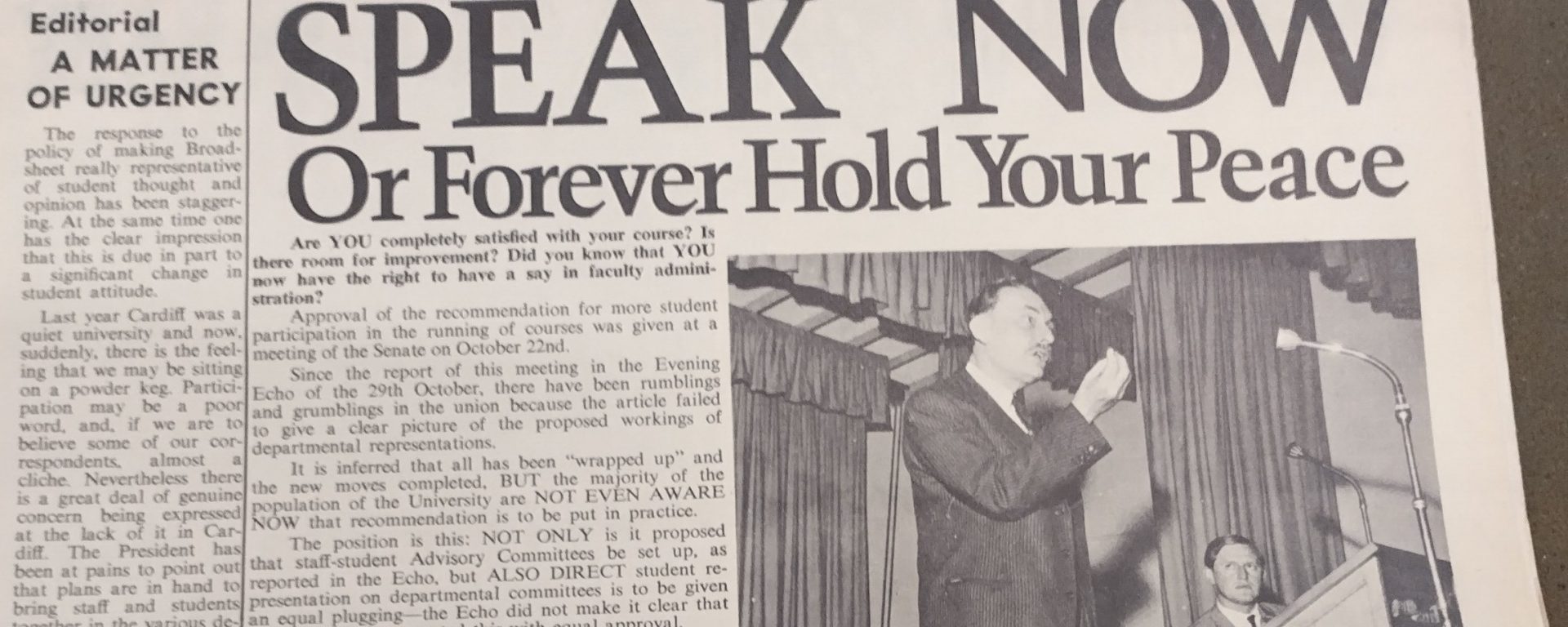
It has been 57 years since Enoch Powell, described by some as the “best prime minister his country would never have” and by others as a racialist provocateur, made his eventful Cardiff University visit and speech. So, what can the events of November 1968 tell us, and are we currently seeing a reincarnated Powell sneaking his way to electoral victory in the UK?
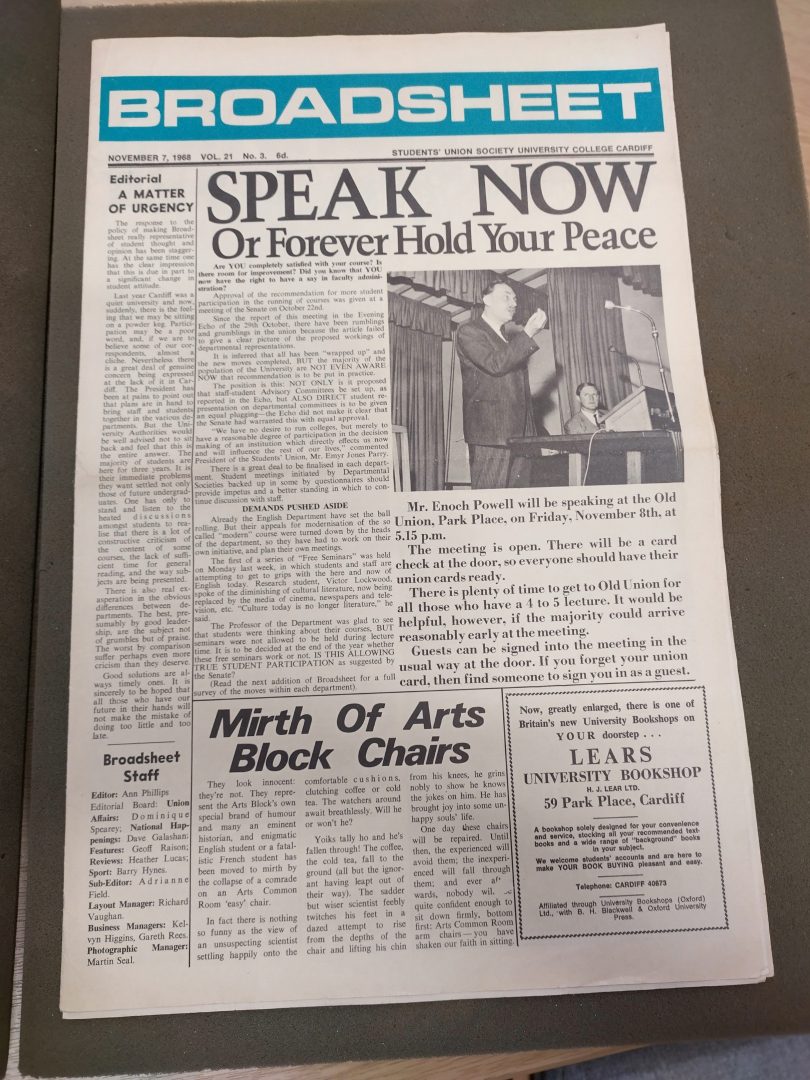
Prior to his visit to Cardiff, Powell made his most famous speech that April: the “Rivers of Blood” speech, in which he spouted inflammatory remarks against Commonwealth immigration, immediately leading to racist heckling of the then Kenyan ambassador to the UK, as well as racial violence across the UK. This backdrop of tension led to anger at his plans to speak at Cardiff and caused the Cardiff University Conservative Society chairman to resign and eventually be replaced by a pro-Powell figure. Articles written by Broadsheet (precursor to Gair Rhydd) and letters to the newspaper were overwhelmingly negative about Powell, but they generally stressed the need for students to allow him to speak and to oppose him positively in a non-violent manner.
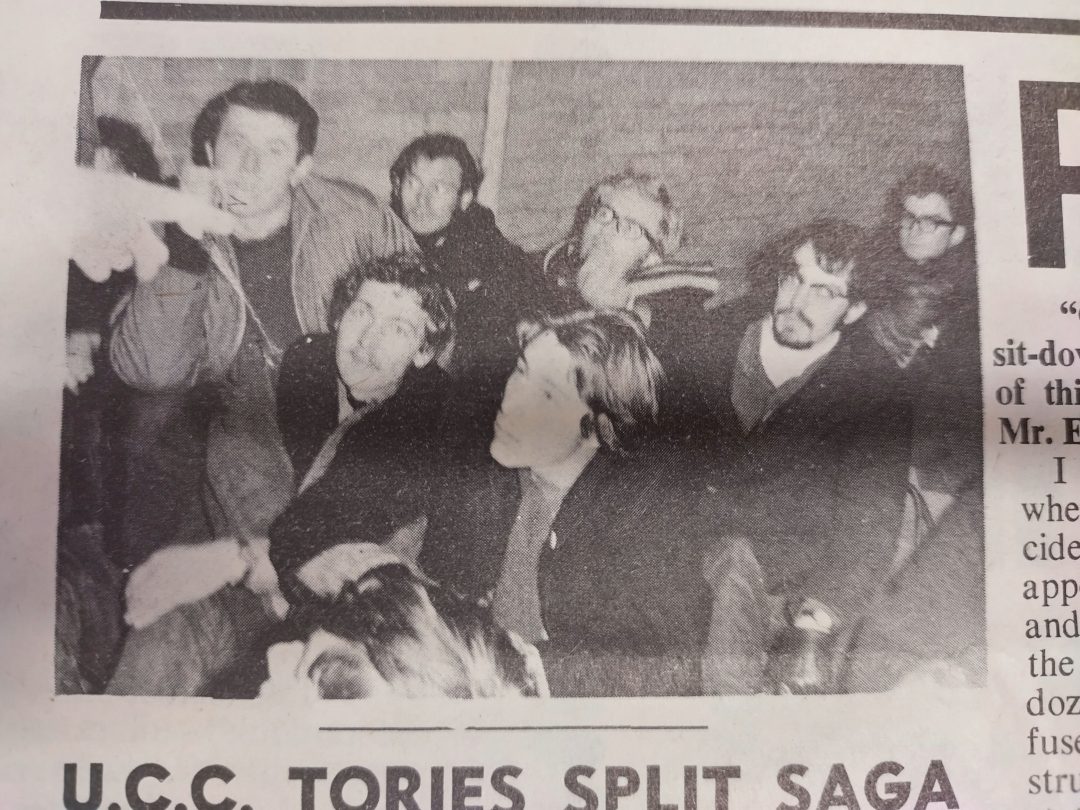
His visit, however, would not be received warmly by many students. From the outset, a sit-down of a dozen or so students blocking Powell’s car from entering resulted in an appeal from the Union to move being met with a cry of “sod the bloody Union”. Windows were then broken and shoving ensued when people became frustrated with not being allowed entry to the speech hall. When Powell was finally able to gain entry and began speaking, around 100 students, mostly from the Third World Society, performed a walkout and left the hall. Powell was also forced to cancel his later meeting because protesters prevented his exiting of the building by surrounding the doors. All this was capped out with the chief inspector of police calling the Union and informing them that they had received an anonymous call reporting a bomb on the site, which was later found to be a hoax.
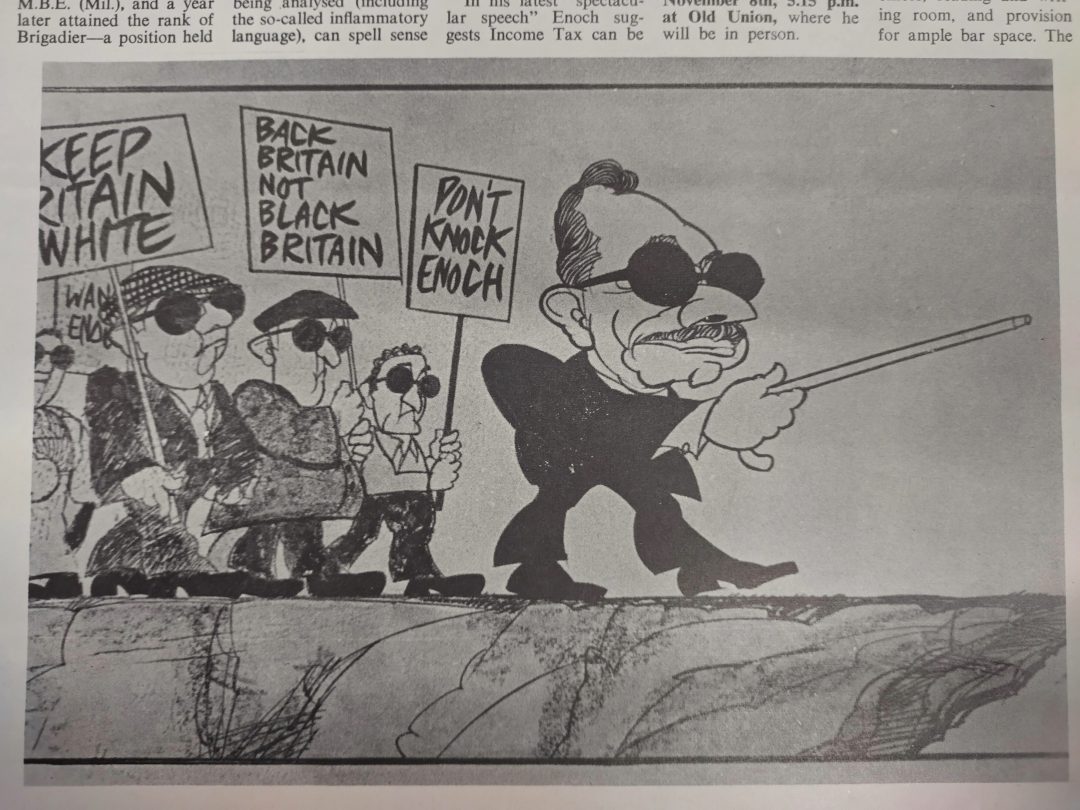
Responses to these protests seen in Broadsheet ranged from stating that this was “responsible opposition” and “morally justified” to “exhibitionism” that satisfied only “the more moronic amongst us”. The Western Mail labelled protesters as “unruly students” until changing to a more neutral tone—of course, leading to accusations that the paper was fickle.
Powell’s visit draws comparisons to today, with Jacob Rees-Mogg being “chased by protesters” and “hounded off campus” after speaking to the Cardiff University Conservative Society in April 2024, being met with pro-Palestinian supporters whilst exiting, with one individual pressing themselves to the front of his car before being removed by security (to note, Rees-Mogg did state that this protest was lawful and “the proper traditions of adversarial debate were upheld”).
However, the more important comparison would be to seemingly incoming PM Nigel Farage, the most popular politician in the UK if polls are to be believed. Described just this month by Labour Minister Peter Kyle as “today’s incarnation of the politics of Enoch Powell”, it is easy to see why Farage is painted as a Powell reincarnation.
Farage shares both Powell’s ability to resonate with large parts of the working class whilst coming from the upper echelons of society and his ability to generate divisive views of either hatred or adoration depending on who you ask. Whilst Farage has never spoken at Cardiff University, and may never do so, I imagine that a protest similar to that of November 1968 would not be out of the question if he attempted to do so.