Edited by Olivia Griffin
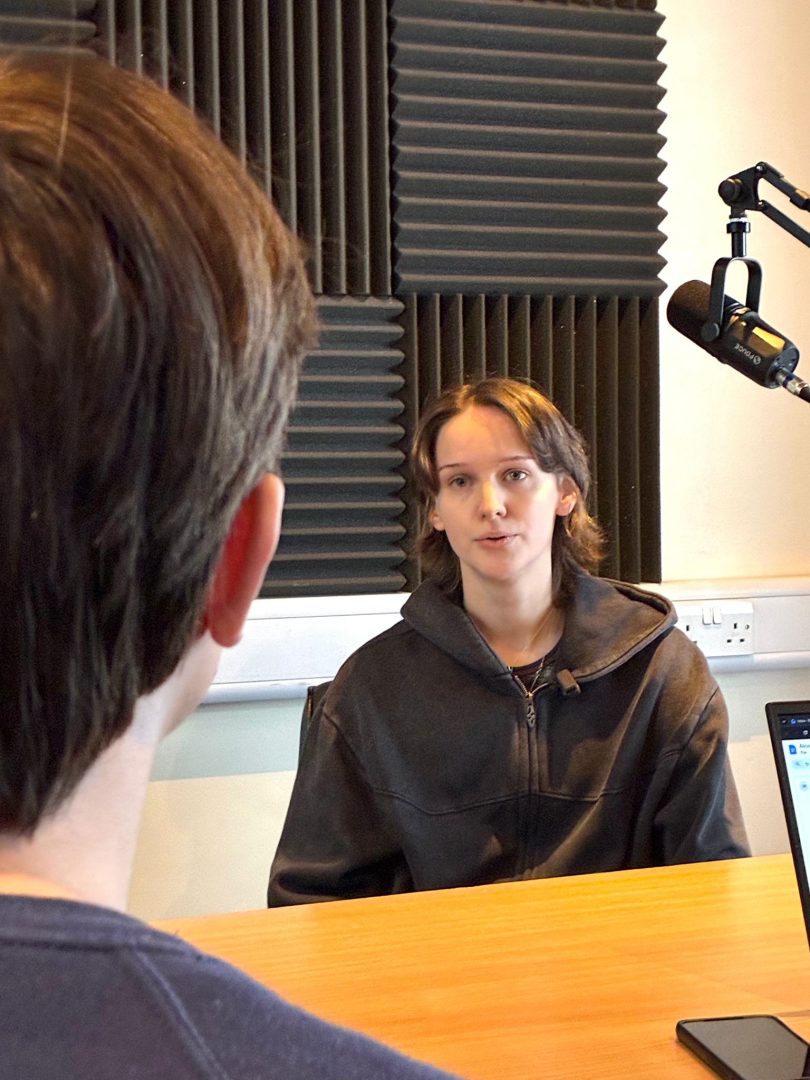
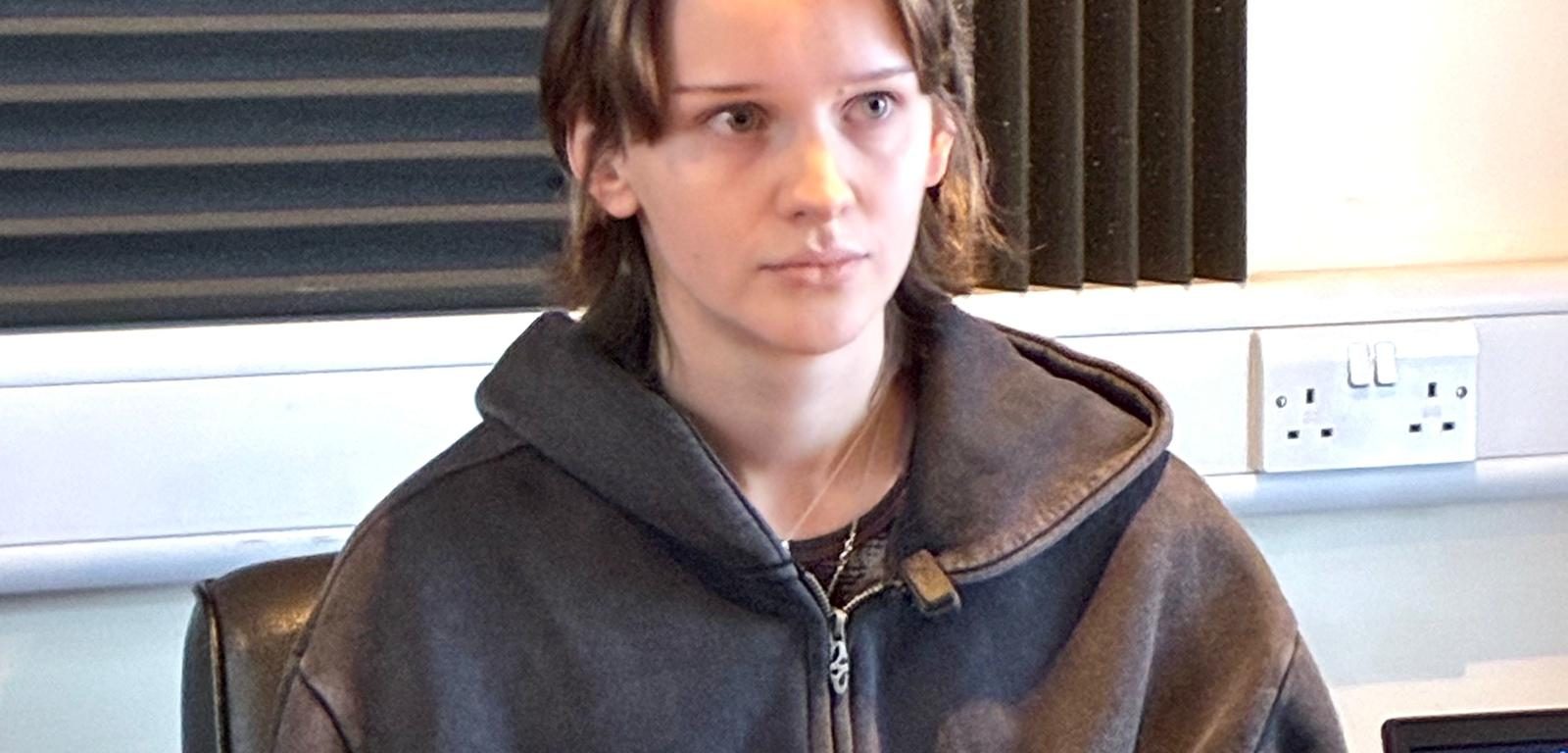
Alice Nicholson discusses their 2026 Students’ Union Presidential bid with Deputy Editor Aneurin Davies and Head of Politics Ruaidhrí Gillen Lynch.
Prefer to listen to this interview? Follow @gairrhydd on Instagram for more information.
This interview is published verbatim. Views expressed are those of the candidate and do not necessarily reflect the views of Gair Rhydd or Cardiff Students’ Union.
You’re a student at Cardiff University. What are you studying, and what drew you to that subject?
I study Chemistry. I think I just always quite liked it at school. I was quite fed up with all the other subjects, so I thought I might as well stick with the one that I hate the least.
Where did you grow up? What kind of school did you attend, and can you tell us a bit about your childhood and teenage years?
I grew up in Surrey. I went to Reigate Grammar School. I spent a lot of my time growing up doing sports and getting involved in politics.
I got organised as a Communist when I was still in school, helping with the setting up of a Communist society and debating with people. That’s also, I guess, what drew me to Cardiff University, because there was that Communist base here and I wanted to develop that.
When you think about your life outside of university and campaigning, what does that look like?
I do a lot of reading in politics, philosophy and economics and I also climb, which is kind of a non-political thing to spend my time doing. I’ve been learning chess recently too, which is fun.
Do you have any favourite social spots in Cardiff?
I think it’s really just the climbing that I do when I have time for it.
Late last year, you described the Russian Revolution as the greatest event in human history. Would you care to explain why you believe this?
It was the first time in history that ordinary people took power, overthrew a government and then held it, setting off revolutions across the world.
I would say that if the Russian Revolution had never happened, it entirely changed the course of history.
At the International Women’s Day March for Palestine in March 2024, you said women’s liberation is inseparable from fighting capitalism, and that women of the ruling class are doing “absolutely nothing” because it’s against their interests.
Then, at the Time to Act forum in March 2025, you said that capitalism itself promotes violence against women and shapes women’s choices. Do you think that capitalism is the main reason that women have been so oppressed for so long?
I mean, women’s oppression is the oldest form of oppression and it goes back to the whole history of class society. I think Engels said that once you had class society and private property, women also became property, because men needed to know who their children were in order to pass down what they had acquired for themselves.
I think that’s developed through all of the class societies that we have today. I think that the only way to free women from oppression is to end class society and I think that’s against the interests of women in the ruling class.
Although they suffer from the oppression of women, they are not able to fight it if they’re defending the capitalist system, which relies on the oppression of women, as the labour at home that women carry out is unpaid.

In 2022, a former member published a detailed account of why they left Fightback, now the Revolutionary Communist Party, describing serious failures in how allegations of sexual violence were handled.
After the allegations were published, the party responded with a lengthy statement, emphasising organisational defence, warning of “political attacks,” and strongly rejecting the claims.
Since then, the organisation has also restructured. When you read a response like that, how does it make you feel, and how do you reconcile these events and your membership in the same group with your own personal views?
I don’t know anything about the sexual assault claims in the party in Britain, so that’s not something that I’ve seen really. But I know that in Sweden, that was part of a political campaign against the party which was used by other anti-communist groups.
I think that sexual assault is a very serious problem and from what I’ve seen in the party, when those issues come up, they would be dealt with very seriously.
Would you accept that there’s almost a risk that the tone is too forceful in defence of the organisation, which might discourage victims from coming forward even if changes have been made in the party?
I don’t really think so. I think a lot of the defences that have come out have been on a very political basis. The culture inside the party is one where people look out for each other’s best interests.
I don’t really know what else to say about that. I haven’t seen specific reports or anything.
If you were to win the election, what steps would you consider taking to eradicate rape culture and sexual violence on the Cardiff University campus?
I’m in favour of campaigns against sexual violence and supporting victims in every way possible so that they feel like they can come forward. When they do come forward, things need to actually be done so they can feel safer on campus.
Do you have any plans on how to materialise those aims?
I don’t have any specific plans right now. I know there are campaigning groups on campus who do have plans that I would happily discuss with them and see what the best way forward is.
Speaking to victims as well and seeing what they think needs to be done would probably be the most important thing, because I know there have been lots of cases across universities where people face sexual violence.
You say you want to kick capitalism off campus by “ending the marketisation and privatisation of education”, but some might say that this is not a realistic goal for an SU President to actualise.
Could you please tell us what jurisdiction you would have as SU president that would guarantee delivering that vision, and what steps do you plan to take to achieve it?
I mean, the general point is that universities have been run like businesses since 2008. They have to search for private funding and make their portfolios as attractive as possible to investors. Based on that, we’ve had many job cuts and student services being cut.
I think the role of Students’ Union President would allow me to use a platform to organise students by going to different schools, holding big forums and electing students on that basis across the whole university, and workers as well.
Then you could have a group of students and workers who would be representative of the whole student body, which right now is not something that takes place at all.
One person being Students’ Union President isn’t something that is necessarily going to radically change the university, but I think the point of my campaign is to point out that universities are going to continue to get cut and they’re going to continue to get worse and worse and worse.
The only way to fight that is by mobilising students and workers, so I would use the platform to put those ideas across.
You say your movement could go beyond Cardiff and link up the entire higher education sector to challenge the capitalist system as a whole. Can you tell us how you plan to work towards that moving forward?
We, as the RCP, are on 60 campuses across the country. If I got elected, I would call out to the different Students’ Unions and people on their campuses to organise, get involved with this campaign and link up.
We saw it with the Palestine encampments a few years ago. There is that massive potential for students to link up across the country and fight for a common interest. I think if I had that position and we were able to organise on many campuses, that would be how you do it.
One thing missing from you, in terms of your vision of what change is going to happen, is how you’re going to deliver beyond just organising students. Because the SU Election is also about the admin that you have to deal with in the position, and how you’re going to actually deal with the people that you have to work with in the Union.
If we look at the whole situation properly, you can see that the Students’ Union is a charity that’s completely apolitical. We’ve had the Palestine movement and we’ve had the campaign against the cuts at the university, and the Students’ Union has not organised students at all.
I think the Students’ Union should be a fighting body for students’ interests. I don’t think the way it’s set up now, and the way you elect a few student representatives to hold these positions, really changes much, given the reality of the situation we’ve had.
These job cuts, student services being cut and mental health crises among staff are very serious things. I don’t think they can be fixed by one student speaking to management in a nicer way.
If I were in this position, I would work with everyone around me to try to change things positively in every way I could. I think the main point is that only by mobilising and organising students can we actually use our power within the university to achieve effective change.
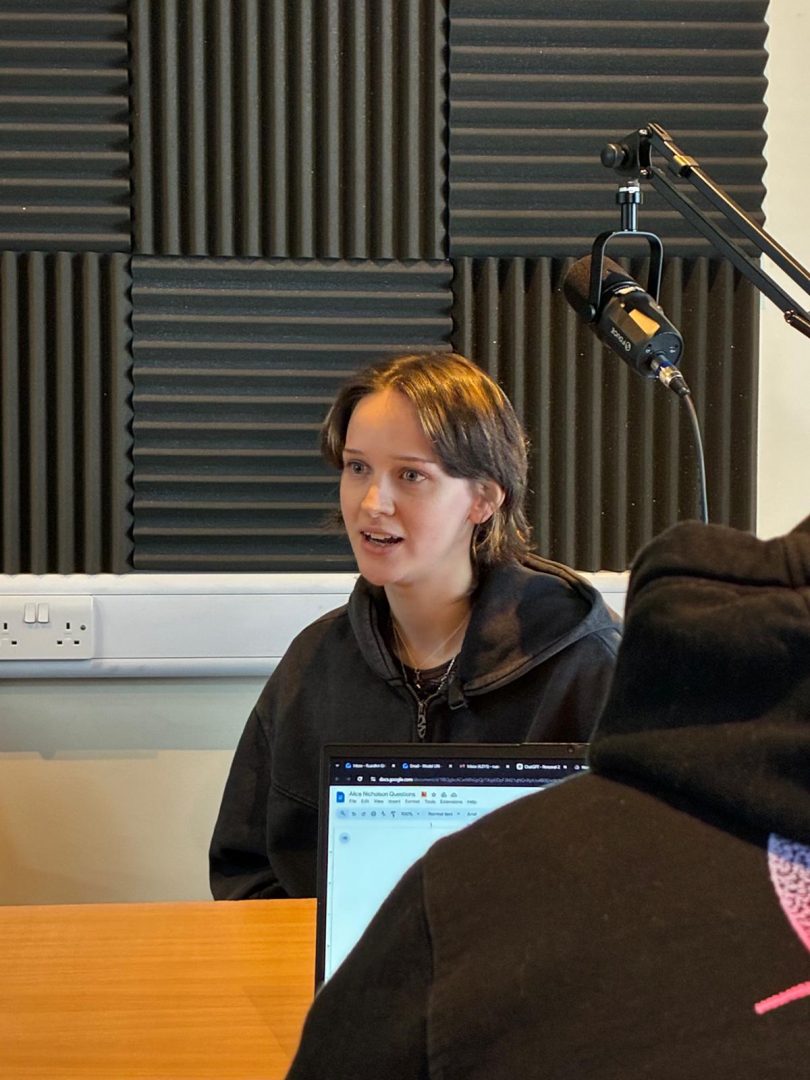
A lot of people would say that one of your strengths as a candidate this year is that you’ve been active around Cardiff, and you also had a campaign last year as a senior figure within the Cardiff branch of the RCP.
What experience do you have in this role that you feel would benefit all Cardiff University students, maybe specifically more in a Welsh context too?
I think that throughout my time at Cardiff, I’ve been organising all sorts of students who are interested in changing things at the university and within the capitalist system itself.
I speak to so many different people on a daily basis to find out what problems they’re facing and how that links to the change we can make if we run a campaign or something like that.
Could you tell us which bodies you’ve consulted regarding the policies you plan to enact in the Union? Have you spoken to anyone else at the Union or to students, or conducted any consultations on your plans and manifesto?
Mostly I’ve been speaking to different students throughout my time at Cardiff University, basically on a daily basis, about what they want to change at the university and what they think can be done.
I’ve organised many meetings, given many, many, many talks and had lots of open discussions with students throughout the whole time. It’s not necessarily a particular body that I’ve gone to, but the students as a whole.
What makes you the best candidate to be SU President?
I think my campaign is obviously a lot wider than just being elected into a position and having a set of promises that probably can’t actually be carried through under the set-up of the Students’ Union and the way that management runs this university.
I would say that my strength is that I understand the need to organise students and workers to strike, to mobilise and to fight back.
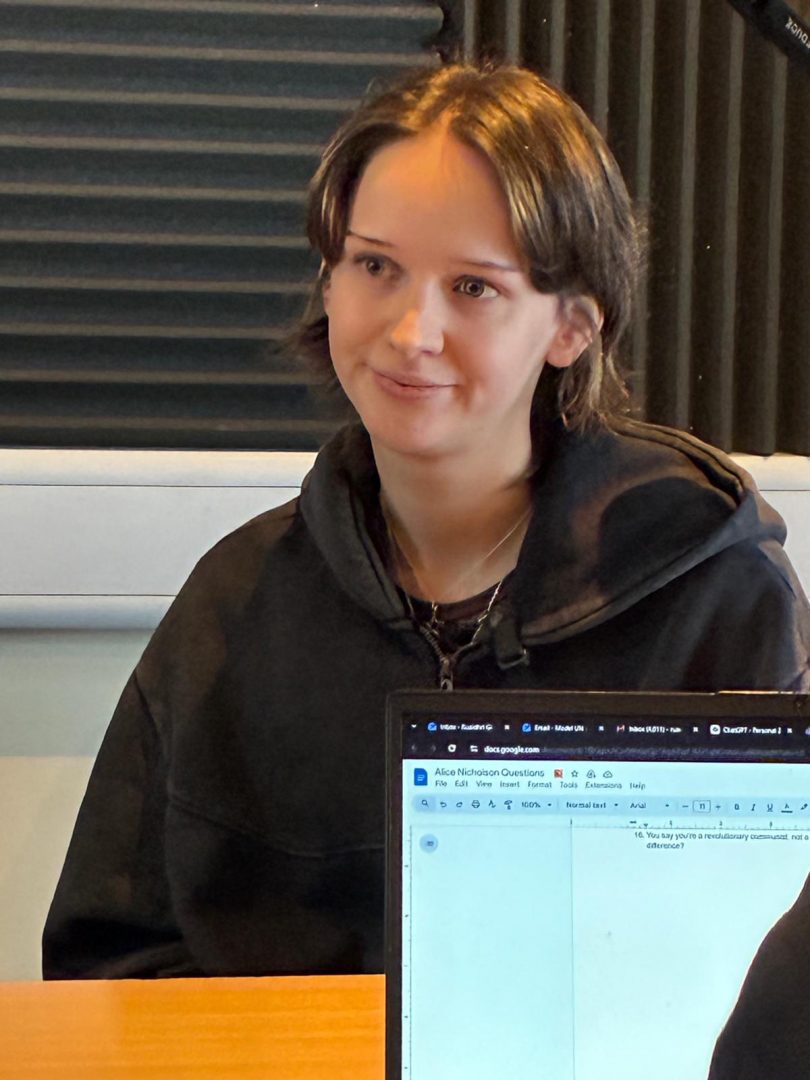
Would you accept that perhaps some of your own manifesto commitments might not be as achievable as the headline says? Is the main positive of your campaign the push for the organisation of students? Essentially, is your selling point bringing students together rather than a specific policy of what to change?
I think the selling point is the fact that it is the only realistic way to change what’s happening right now. At universities across the country and within the capitalist system itself, I don’t think there’s any realistic way outside of organising and fighting management that would benefit students and workers at this university.
In reality, funding for the university is going to continue to get cut. They actually have more of a deficit than last year. Despite the cuts that have already been made, we’re going to see it get worse and worse and worse while management continues to act more and more against students’ interests and against workers’ interests.
I think that the only way to save the university and actually have it run for education is by building this sort of campaign. Some people might look at it and think, “This is not realistic” or “This is not something that can really be done”.
But I think we can look at the Palestine movement, we can look at the general strike in America against ICE and revolutions all across the world to see these pressures being felt by students and workers at universities. I think at some point that is going to explode and we will have these mass movements on campus.
By putting forward this programme, when those movements happen, we can use them to run the university in our interests and build a movement to end the capitalist system.
You say you’re a ‘revolutionary Communist’, not a ‘student politician’. What is the difference?
I think the point is that the idea of a student politician is that you will take the role and diplomatically try to work with management.
I would say that the interests of management are completely opposed to the interests of students and workers, and that’s why I would say I’m a revolutionary.
I’m a revolutionary Communist and I think that ultimately, as I’ve been saying, the only way to have real change on this campus and more widely is by mobilising students to fight against that, not by discussing with management, who will, in meetings behind your back, ban protests on campus for students and cut funding and all of these sorts of things.