
By Oliver Hanlon
On Wednesday, 4 March 2026, the Glee Club in Cardiff hosted a stop on the book tour for Minority Rule: Adventures in the Culture War, the bestselling debut from journalist and political commentator Ash Sarkar. The evening, titled “Ash Sarkar: In Conversation,” featured Sarkar alongside host Oli Dugmore of the New Statesman, discussing the themes of her work.
Sarkar opened by covering the case of John Davidson at the BAFTAs and how the discourse had pitted disabled and Black people against each other.
She expressed that once “American Twitter” got hold of the incident, the discourse was soured, especially by figures like Jamie Foxx. Sarkar cited this as a “micro event” and a culture war blown out of proportion, when the conversation should instead be focused on Iran.
Turning to media mechanics, Sarkar talked about how, “allegedly,” Peter Mandelson used to cut off journalists who published quotes he did not like, asking them to call and ask if he “really meant it.”
Dugmore added that Andrew Marr had once told him about Mandelson calling him whilst he was Political Editor at the BBC to threaten the withdrawal of senior Labour figures from programming.
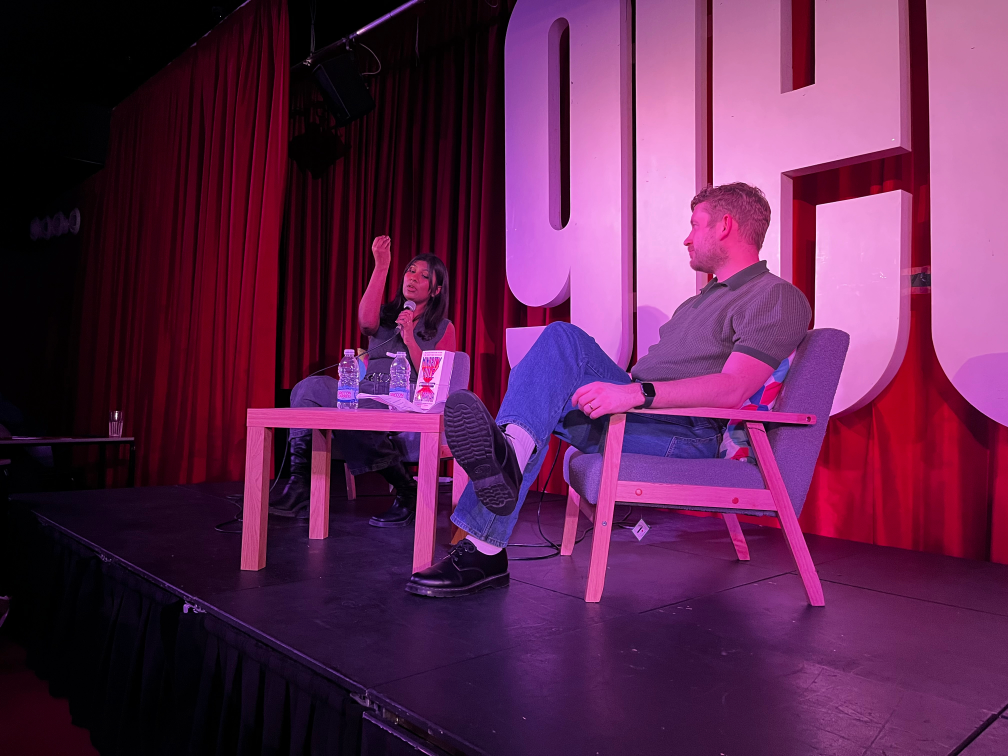
They noted that politicians have effectively become pundits whilst Lobby journalists prioritise access over the story. They cited an incident where a journalist encountered a senior Labour figure and was told that none of Keir Starmer’s leadership pledges “would bind our hands,” effectively shutting the Left out of power.
In the second half, questions from the audience were put to Sarkar. Asked if paying to hear shared views was self-defeating, Sarkar was candid: “All of the things that I talk about in terms of the disaggregation and in some way the depoliticisation of left politics, and who is making money from it, it’s me. I think the value of something like this is that it affirms that you’re not alone.
Lots of people think the way you do but [a movement] all happens outside of this room.” Sarkar also addressed Cardiff University’s £200,000 injunction against unauthorised protests, urging a rejection of the “permission slip” mentality: “The status quo responds with authoritarian measures and we go, ‘Wait, where’s my permission slip?’ Keep doing what you’re doing. You just have to be ready to pay the costs.”
Sarkar also offered a systemic critique of modern mental health discourse, framing the rise in ADHD diagnoses as a “downstream consequence” of predatory technology: “I wonder if our tendency towards labelling and diagnosis is actually taking us away from political critique rather than towards it. Mental health has a kind of mission creep to talk about all the kind of alienation and anomie and suffering that we experience because of the way in which capitalism has developed.”
When asked about success in the new media climate and advice for aspiring journalists, Dugmore offered provocative advice on training: “Do not study journalism. Study the thing that you are interested in. I went to Cardiff, I studied politics. And you can then do journalism in the field in which you’re interested. You can teach anyone any set of soft skills; what you can’t teach someone is attitude.”
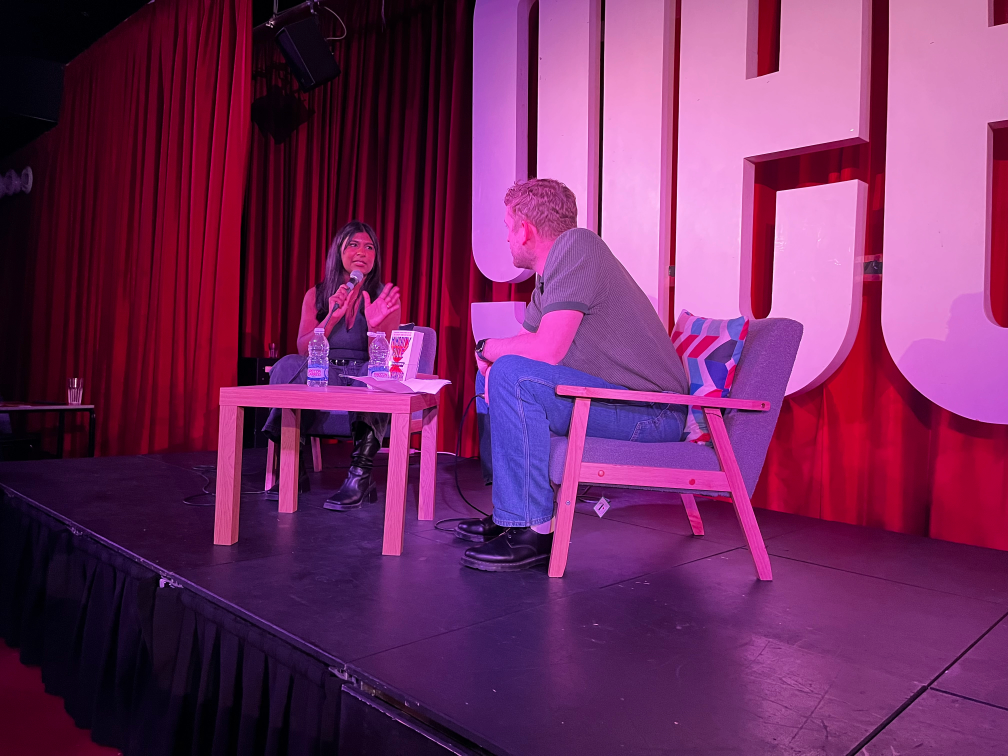
Sarkar reinforced this by focusing on strategic integrity: “Rule number one is don’t look at what other people are doing, look at what other people are not doing.
“Novara was born because of a gap in the market. Rule number two is don’t say anything that you don’t believe. Rule number three is the importance of trust and affection with the people that you work closely with.”
Finally, the conversation turned to tactical voting in Wales. Asked about the choice between the Greens and Plaid Cymru, Sarkar argued for breaking the Westminster duopoly.
“This is the Leninist in me is that I would probably go Plaid over Green because it weakens the Westminster system,” she said, suggesting the goal is to disrupt the two-party hold rather than being “guilted” into voting for Labour.
Sarkar then left to sign copies of her book in the corner of the room.