
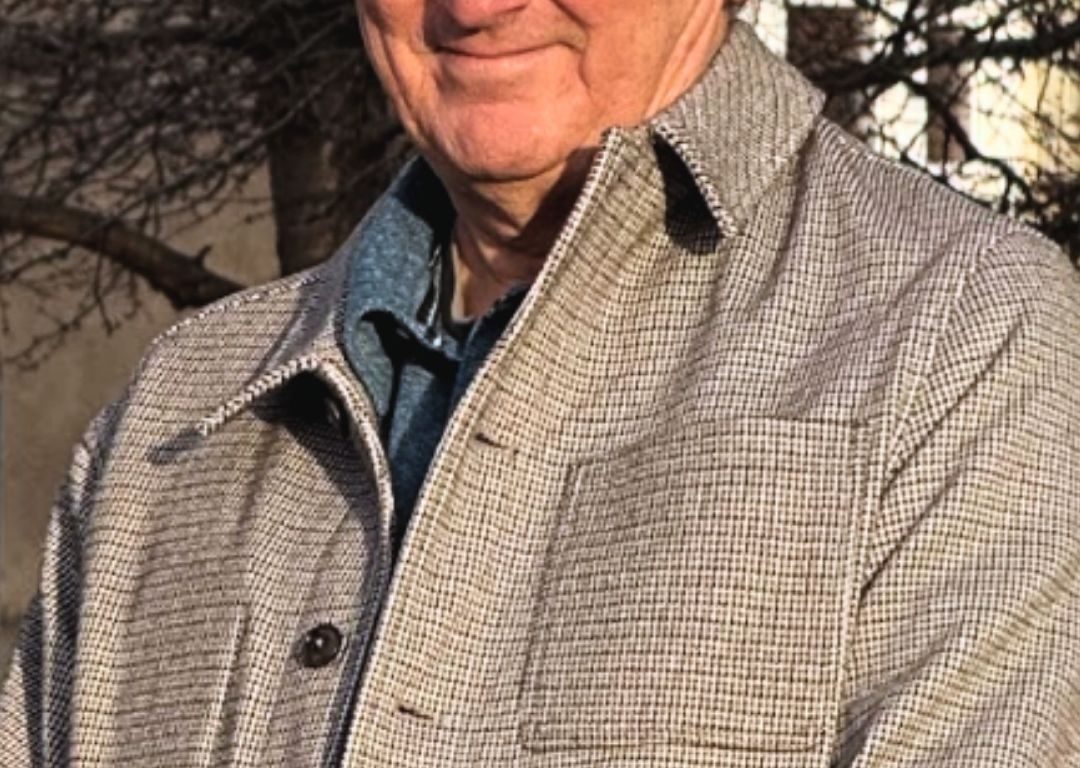
Interview by Oskar Hyams and Ruaidhrí Gillen Lynch
Anthony Slaughter, you are running as the leader of the Welsh Greens. For those who might not know much about you, could you tell us a bit about yourself?
I have lived here in Penarth, in Cardiff, for 22 years now. Before that, I grew up in apartheid South Africa. I’m from Yorkshire originally, but I grew up in South Africa. I did my secondary schooling there, and that was really the start of my politics, becoming politicised by what was going on in apartheid-era South Africa.
It was very obvious what power was for, and what politics was for. Then I moved to London and spent 20-odd years there, the first ten of which were very heavily involved in the squatting and punk scene. Again, that overlapped with my politics, the miners’ strike and different campaigns. Eventually, my partner was from Cardiff and wanted to come back to Wales, so that is how I ended up here. Before then, my politics had always been very activist and campaign-focused, supporting the miners, the poll tax demonstrations and similar campaigns.
When I moved to Penarth, I became heavily involved in community activities, transition town-type work, and became the chair of Gwyrddio Penarth Greening. That involved things like organising local food festivals, planting community orchards and similar community projects. I had already been a member of the Green Party for several years, but not an active member. Through that community activity, people started saying, “You should stand for the council.” So I did, in the 2012 council elections. I got a good result, but did not get in. Then there was a parliamentary by-election that year, and it snowballed from there.
I have been heavily involved with Wales Green Party ever since. I think it works out at an average of almost one election a year, because we had 2017 and 2019, when they kept calling general elections, then the last European elections, Senedd, council and Westminster elections. That is why it was even more rewarding to see where we’ve gotten to now. In 2024, coming second in Westminster in this constituency, that was the first time we had ever done that anywhere in Wales, and that showed us that we could do this in the Senedd election.
You mentioned that you grew up in apartheid South Africa and moved to the United Kingdom during the miners’ strikes, and you’ve also described yourself as an anarchist. Would you say those events radicalised you or pushed you towards that ideology? What subsequently drew you to the Green Party, as someone who started on the fringes of activism and then moved into party politics?
It was very much that in South Africa, being involved with student strikes as an obviously privileged white person, but still being aware of what was going on, gave me a real sense of what power is and what power is about.
Then, moving to London and getting caught up in the punk movement, “anarchist” was a very loose term then. I was talking to someone about this the other day, and “we said we never really read all those anarchist books, did we?” It was more about taking control of your life and accepting that the system was not working fairly.
Then you had issue-based campaigns like the miners’ strike, seeing different communities come together. There was support from the London lesbian and gay community for the miners, and similar connections with anarchists and squatters. I think I joined the Green Party around the time Caroline Lucas got elected. My younger, self-styled anarchist squatter self would have been horrified that I had joined a party, let alone become the leader of one. But the Greens seemed like a good fit.
In one of the houses I lived in, one of the local Green Party members kept the Green Party printer in my bedroom. So I had always known Green Party campaigners, and it felt like the right place. Like many people, I joined and thought, “Here’s some money, I will support them.” But through my community activity in Penarth, I realised that while local work is good, we also need to shift the framework.
I was meeting people worried about inequality and the climate crisis, and doing small-scale things on the ground obviously helps, because people feel a sense of agency. But to really tackle those issues, we need access to the levers of power. That is why I became an active Green Party politician. My role is to get elected and to get Greens elected, so we can shift the frameworks that govern how things work.
You discussed the need to get to the levers of power in order to change things. Before the Blair era, Labour was the default choice for much of the left. Were you ever drawn to the Labour Party, the self-styled party of the workers, or was it always the Greens for you?
I think even then I knew enough to be disillusioned with Labour. There was prevaricating around the miners’ strike, and you could see the internal tensions then, the party being pulled in two directions. I was fortunate because, even as an anarchist, I still understood the importance of voting. Where I lived, I was quite lucky because Diane Abbott was my MP, so I was comfortable voting for Diane because I shared a lot of values with her. But Tony Blair moved to the area several years later, and I never voted for Tony Blair.
Labour was never a natural fit for me. Historically, yes, you can see where it came from, especially here in Wales, with the building of the NHS and communities coming together. But it left that behind a long time ago.
You said on ITV News that you had stood for perhaps ten or eleven elections and had never been elected. Zack Polanski, the leader of the Green Party, labelled the Welsh Greens, and you, as kingmakers in this election. Do you think you have enough elected experience to make the right choice, should you choose to enter into a coalition with, say, Plaid Cymru or another party?
I am getting asked this a lot by journalists now, unsurprisingly, because the numbers are going to fall in such a way that no one is likely to have an outright majority. It looks like Plaid will be the biggest party, but without an outright majority. As an ardent republican, I would prefer a better word than “kingmaker”, but it has stuck. People want to know what we would do.
On the experience question, there are two strands to that. Those so-called experienced politicians in the Senedd over the last 27 years have run Wales into the ground. We have some of the highest rates of child poverty, one in three, and some of the most degraded natural environments in these islands. So I do not think that sort of experience necessarily has the answer.
What we do have is the experience of living ordinary lives. We have people like Hannah Spencer in Gorton, a plumber. Before I started doing this, my business was gardening. We have people with lots of experience, people who have lived in inadequate housing, people who have struggled to raise families as single parents. Those experiences are in many ways far more valuable than someone who has done a degree, done an internship, stood in a few unsafe seats and eventually got selected. That is not to say they are all bad at it, but I do think you need a variety of experience in places of government.
What are your red lines for entering into a coalition?
I prefer to call them green objectives, but we keep getting asked this. I am not going to negotiate ahead of the next election. We are obviously thinking about every possible scenario. This goes back to the question of experience. We have people separate from the campaign working on planning for the first 100 days. That includes the logistics of how you set up, but also how we make an impact in the first 100 days and how we approach any discussions with other parties.
Without saying what red lines would be, we have been very clear in the campaign about what matters to us. Our priorities are protecting tenants, so a rent freeze followed by rent controls, replacing unfair council tax with a land value tax, and cleaning up our rivers. We have some of the most polluted rivers in the UK while paying some of the highest bills. We also talk a lot about how the other parties are already backtracking on their commitments to tackling the nature and climate crisis. So it is fairly obvious to people, and to other parties, what sorts of things we would want to see.
We are not going to support a future government, whatever shape that takes, simply because it is not Reform. We have bold policies in our manifesto that we think Wales needs, and we would want to see some of that enacted in return for our support. I have been speaking to the Scottish Greens a lot. I went to their conference last November because they have been there and done it. They were in coalition with the SNP, got some things done, and when the deal went wrong and the SNP started watering things down, they walked.
I am making that clear as well. We are not there just to have a ministerial office. We are there to make people’s lives better and the future better. Our support would be very conditional on those things we have told people are our priorities.
You talk, very rightly, about getting policies across the line and the importance of getting them through government. Oskar and I attended the Politics Society’s hustings on campus. There, both the Green and Plaid Cymru candidates were very hesitant to answer questions about what they personally thought might happen after the election. Some people might wonder whether you, Rhun ap Iorwerth and others have already had conversations about how that coalition or cooperation might work. We are not far from election day, surely those conversations with other parties are already happening?
No, there have been no discussions yet. We have friendly conversations and chats, but we cannot take anything for granted. I would like to think there will be some initial conversations before the election, but that is up to other people as well. I have made it clear in interviews and on television that we believe in cooperation and collaboration where there is common ground.
We did that in Cardiff in the 2022 council elections. Local Green parties have autonomy, so Cardiff Green Party and Cardiff Plaid came together and stood as one under the banner Common Ground. It was very popular on the streets. People liked seeing that cooperation and people working together. That might be why some candidates are hesitant, perhaps they may be worried that something has happened that they do not know about, and they do not want to spook that. Different candidates and members of each party will also have their own version of what an ideal outcome would be.
I am clear that we are ready to work with other like-minded parties. At the moment, I think that probably means Plaid. Labour is responsible for this mess, so I cannot see many scenarios there. God forbid, if the only way to stop a Reform government was progressive parties working together, there would be merits in that, but between three or four parties there would be little agreement. It would be very watered down, and not much would get done.
Where there are areas where we align closely with Plaid, there are areas where we disagree profoundly. Otherwise, we would be one party. Some people will find this difficult to understand, while others will welcome it. Essentially, it is grown-up European politics, where the electorate votes proportionally and the people who are elected work out who can work together. If Party X and Party Y both agree on the need for rent controls, let us make that happen. We might disagree with Party X on agriculture, so we would not work with them on that. But it is a grown-up form of politics, and people in Europe are used to it.
Reform will play heavily into a narrative that the election was stolen from them if other parties reach an agreement. But they will not have the numbers. I am very confident that Reform and the Tories will not have the numbers. They will then spend four years shouting about a stolen election.
I also think they will start to disintegrate once they are in there. Nigel Farage will say, “You are the shadow housing spokesperson,” and three other people will say, “I wanted to be shadow housing spokesperson,” and leave to join Restore or set up another party. We saw that with UKIP. UKIP got elected, won seven members, and by the end of that Senedd there were four different parties. This highlights the difference between, using slightly crude terms, the right and the left. Within the progressive parties, there is an acknowledgement that there will probably have to be some working together. This is very much a change election. Labour has won every election in Wales for 100 years, and after 27 years in government, suddenly to lose would be a momentous moment.
The people of Wales have to see that it makes a difference. In four years’ time, things have to be better. We have to be taking serious action on inequality, climate and nature. Otherwise, if we do not take bold action and fix things, people will start listening to Reform more.
A big part of your campaign is rent freezes. Your manifesto stipulates that rent can only be increased when landlords deliver improvements to housing. How would you monitor whether improvements are sufficient for a rent increase, and how would you enforce standards across Wales? Would it require a new housing regulation body, or a totally different approach?
That would be one option. The reason we are talking about a rent freeze for a year first is to pause, because the situation is so untenable. People are paying massive proportions of their income in rent, often for unfit homes and older homes. We would freeze rents for a year, which gives everyone a bit of stability, security and breathing space. Then we would do the work on how to make rent controls work, looking at places where they have worked well, such as Denmark, and places where mistakes were made, such as Germany. You do not want to get something wrong.
I have spoken to a few landlords who have stopped me in the street recently and said, “Inflation will go up, and my rent will be eaten away.” Rent controls would be linked to inflation, whether CPI or another index. There would be the potential to put rent up once a year by inflation plus 1%, or 0.5%, but that would be controlled.
If that is the rent for that house, you cannot put it up in between without significant improvements. The housing stock is in a state it should not be in. That is partly because central government and local authorities have let developers get away with building poor-quality housing for so long, housing that ages very quickly and needs retrofitting or fixing within ten years.
Some form of regulation, possibly a new regulatory body, would be needed to make sure housing is not just affordable, but decent. Everyone has a right to warm, secure and affordable housing. If you do not have that, you cannot build a life, you cannot build a community and you cannot build for the next generation. People say this will reduce the number of rental properties because landlords will no longer want to do it. But the people saying that tend to be landlord associations and parts of the financial services industry, and they rarely produce proof.
People are often surprised when you remind them that, from around 1916, we had rent controls in the United Kingdom in one sector or another until 1988, when Margaret Thatcher got rid of them. It did not damage the rental market in the way people now suggest, partly because local authorities were building social housing at the scale and pace needed. So it is about putting protections in place for renters and tenants, while also making sure there is an adequate supply of affordable social housing. You cannot do one without the other.
We are coming from Cardiff University, and “shoddy” would certainly describe the average student housing experience. Our sister student media organisation, CUTV, recently did a documentary called Rathays, describing the poor living situations. A lot of parties do not seem to be talking in specifics about student housing, though, and at that hustings I referenced, the Green candidate did say “yes” when asked if students are being exploited while Labour, the only ones, said “possibly”. Meanwhile, students are stuck. They do not want to vote for Reform, and for many, the question is whether they vote for Plaid or Green. Help them choose: what are the Greens going to do on student housing?
It ties in with providing a better supply of housing and better regulation of landlords. They should not be able to rent properties in that condition. What you often find with more established parties is that they pay more attention to older voters. If a pensioner or older person complains about houses in multiple occupation and says students are disruptive, political parties make calculated decisions, because older people vote more regularly and do not go home, they vote here.
Student housing, though, is the prime example of how broken housing is. It goes back to better regulation. No one should be paying rent for damp, mouldy homes. Often, there is a letting agent or landlord in the middle and someone living in Dubai owning hundreds of these houses. They are not even aware of the condition of the houses, they just know that they get their thousands every week. It absolutely has to be addressed. It also goes hand in hand with making student life easier. My generation was able to study for free. We still believe higher education and further education should be free.
It will take a long time to fix that, but one of the other things we would do is tackle Plan 2 student repayments. Some people took out earlier loans that, yes, they should not have had to take out, but they were repayable if you got a job. Now, people with undergraduate and master’s loans can get a good job and a year later owe more than they did at the beginning. We would stop Plan 2, and we are looking at what mitigation we could put in for people already saddled with Plan 2, perhaps some form of reduction as a starting point.
It is ironic that, in a country so proud of talking about future generations, young people are often taken for granted. I describe my own life carefully. I dropped out of university and went off to do what I wanted to do, partly because, even though I was an anarchist, the welfare state worked. You could go off, explore things and take risks. Alan McGee, who started Creation Records and managed Oasis, has said those bands would not have existed without squatting, council housing and the welfare state. At that time, and that included free university education.
We need to step out of the spreadsheet. Of course, we need to know how we will pay for things and what our priorities are. But that way of looking at everything misses the fact that if you fix student housing now, and if you make higher education and apprenticeships more accessible, you will have a healthier economy in ten years’ time. Politicians tend to work within a narrow four or five-year cycle.
I am glad you brought up coming out of the spreadsheets. The way I see it, student accommodation is two-pronged. There is cost and quality, but also community and safety. On campus, for example, we have a large campaign group called ‘Time to Act’ who are about women’s safety and sexual safety, and they point out lots of issues, and to give you a more personal example, my girlfriend has had been cat-called multiple times within the space of a five minute walk on multiple occasions often by men two or three times her age, and then there are also broader issues of crime in student areas. Politicians tend to talk about high rents, which is important, but less about how they feed into worse communities and student safety. Do you see this as one issue where you can attack both problems together, or do you need separate approaches? What is the answer to community safety?
I think there is overlap. Safe, secure housing is what allows people to build communities.
I have just come from Friday prayers at a mosque, and I was talking about getting over divisions in communities, and the way disruptive parties on the right are stoking those divisions. Crime is linked to inequality, although not all crime, and not necessarily the crime you have just described.
It is also about public discourse and what has become acceptable. Society has almost been fractured, and it is no accident that we have lost community centres, youth centres and libraries. Those are places where communities come together, get to know each other and build a sense of community and pride. You might be from a different background to me, but this is our community, this is where we all live, and we need to get that back. It should not be accepted that people feel unsafe walking home.
I do think they go hand-in-hand. There are specific measures for housing and for safety, but the broader issue is 27 years of failure. The investment has not been made, the work has not been done, and we have parties under pressure from landlord associations and big business. They have lost any connection with making life better for people in their communities.
We have touched on how the Greens support free higher education at some point, and how you would like to see Plan 2 student loans reformed. The First Minister said last month that she would not freeze student loan thresholds. Would the Greens freeze student loan thresholds?
I will email you, I imagine we would, but I do not want to put words in other people’s mouths and then have them go up. But absolutely, we want to address the problem of spiralling student debt.
Staying on universities, you have promised to invest long-term to expand course availability for higher education. Could that funding be used to reinstate the courses lost at Cardiff University during the most recent cuts?
Yes, absolutely. I am really disturbed by the idea that some fields of study are more cost-beneficial than others. Education is about creating a better society, a better community and better individuals.
To suggest that some aspects of art or culture, for instance, are not as valid or valuable goes back to inequality and the job market. When I was considering what I wanted to do in life, university was where you went to explore what you wanted to explore. You might not end up working in that field. Now, I can understand why so many young people make decisions based on whether there will be a job at the end of a course. But I absolutely want to restore that wide variety. When things like nursing courses are being considered for cuts, it shows how broken the situation is.
This mess has taken 20 years to create, which is why it is difficult to undo. The minute I say education should be free, people ask, “Who pays for universities then?” They forget that we used to do this. That is what the welfare state is for. That is what taxes are for. People should be able to study what they want to study.
The question there is, how? I did a piece around the time we spoke with Cardiff Vice-Chancellor Wendy Larner, looking at her leadership and the decisions being made. One of the striking things, beyond the decisions themselves, was the lack of consultation with staff. It is correct to say course availability should be protected, but just saying that might not be enough. What would you do within your jurisdiction to enforce those decisions on a university already making cuts and showing its priorities lie elsewhere?
Again, it goes back to the fact that this has taken so long to get to, and it will take time to undo. But I think you have hit the nail on the head about consultation. Consultation is a word that is overused in politics and in life generally. There are endless consultations, but not enough genuine co-creation. Co-creation is a big part of our philosophy and our policy.
Whether it is the NHS, speaking to the NHS workforce about what would work for them and what they know could be better, or universities, speaking to students and staff about what they want, it has to be about working together to build something that works for both staff and students. It should not be sham consultation. It should be genuine co-creation. It also goes back to representation and democratic representation, which should not just look like me.
As leader of the Green Party, it is my job to make sure we get people elected who represent their communities. I was on the panel at a Muslim Vote debate last night, and several panellists said, “You need to tell us what to do.” But no, political parties need to bring people into politics, whether young people or people from marginalised backgrounds who do know think their voice belongs in politics.
That is how we change things. I am proud that around 20% of our 96 candidates are Young Greens. Young Greens are up to 30, and three of our lead candidates, two of whom could get elected, are Young Greens. That is the only way you really change things, by getting different voices into local authorities and into the Senedd.
The Greens also want to implement a youth mental health strategy, which would expand school-based support and early intervention. Are there plans to expand this to higher education as well, or is the current focus primary and secondary schools first?
I think we are starting there, but the expansion should be wider.
You also have big aspirations on transport. You want to offer free bus travel for under-22s, £1 single fares for 22 to 59-year-olds, and build a new railway link between north, mid and south Wales, etc. However, the IFS has described your manifesto as lacking a plan for how to pay for this bigger state. How are you going to pay for these major investments?
The IFS dismissed everyone’s manifesto. They were rudest about ours, admittedly, but it goes back to the idea that, yes, the public needs to know what we are talking about. But a manifesto is not a full four-year budget plan. You are setting out a programme and a direction, and highlighting your priorities. For things like free bus travel and the £1 bus ticket, we think they are urgent. They free people up, because people are paying exorbitant amounts of money to get to a place of education or work. Being able to travel should not depend on how much you earn or where you live.
Those things are crucial and could happen fairly quickly. We have priced our priorities. Free bus travel for under-22s comes in at £59.2 million. The £1 bus ticket for everyone else up to 59 comes in at £256 million. That is doable within the current Welsh budget. The current Welsh budget has an unallocated amount of about £356 million. There are other things we can look at as well.
Then there is the broader question of fairer funding. Building the railway infrastructure we need does cost money, but Wales is being ripped off again and again by Westminster. We did not get fair funding for HS2, for instance, around £5 billion. We need to get the Barnett formula right and devolve the Crown Estate, as in Scotland, so that our renewable resources can generate more wealth for Wales. Those are things we have to fight for and push for in order to deliver those services. But we also have to be realistic about what we can do. I do not know if even Rhun believes that just because he is in charge, Westminster will suddenly say, “Here is what we owe you.” Getting that fairness will take time.
But there are things the Welsh Government could already do to make life better and has not done. Some are cost-neutral, such as introducing no-fault evictions, which everyone else has done. There is a case that Welsh Labour used to make with some justification, that Tory austerity caused many of these problems. But then we were promised that a Labour government in Westminster would make a difference, and if anything, it has got worse.
So there are priorities such as free school meals for secondary pupils, which I think would cost around £80 million to £100 million. We have worked these things out because we want to deliver tangible improvements, especially if it comes to working with other parties. We want to be able to deliver things in the first couple of years, so we need to know that they are doable.
Of course, events can disrupt everything. Iran, for example, is causing huge upheaval and is blowing budgets out of the water. So you need contingency. We also need to be in the building, with access to data and real-time information, especially on issues such as corridor care. People can push back and say we do not know how much everything will cost, but what we do know is the cost of not doing these things.
Plaid have committed themselves to abolishing the Barnett formula and replacing it with a fair funding deal for Wales. At the Politics Society hustings, your candidate also said your party would want to replace the Barnett formula. What would that new funding formula look like, and how would you approach negotiating it with Westminster?
It needs work on the detail. Plaid are committed to reforming it, and so are we, but the Senedd cannot reform it. Barnett himself said it was introduced as a stopgap measure. It is not fit for purpose. It needs to be much more needs-based, not just based on population per head. There are areas in the north of England suffering similar problems as well.
It requires a wider constitutional reshaping of how the United Kingdom works. It cannot carry on being unfair. Otherwise, we are on a treadmill forever, trying to fix the NHS and trying to build rail infrastructure without fair funding. One of the key things is replacing the Barnett formula with something fair to everyone in the United Kingdom.
You discussed how this is a constitutional issue and something that can only be amended by Westminster. Rhun ap Iorwerth has referred to a leaked memo from Keir Starmer saying ministers should ignore devolved administrations. Do you anticipate that a Labour government would play ball, or do you expect great difficulty? How would you get your point across?
It is a good point. Keir Starmer is getting into very shaky territory after these May elections. We are potentially looking at an SNP, possibly SNP-Green, government in Scotland, a Plaid government in Wales, and perhaps a Sinn Féin administration in Northern Ireland. England suddenly starts to look like a very odd place. Hopefully, the next Labour leader has the sense to understand that, while we, like Plaid, believe independence is ultimately the best place for Wales, you have to fix the constitutional settlement across these islands, and it has to be fair for everyone.
I have seen journalists be quite flippant with Rhun and say he is just going to shout louder than Labour. It will take more than that. But he does have a good point: Westminster Labour can rely on Welsh Labour not wanting to rock the boat too much because they are the same party. So it will be a very different landscape. I do not think Keir Starmer is going to be there, but it could be Wes Streeting, which would make it even harder.
The Welsh Green Party membership voted in favour of Welsh independence. Would you want a first-term referendum on independence, or would you take the same approach as Plaid?
No, I am completely in agreement with Rhun on this. Welsh independence is what we believe is the best future for Wales. No one can argue that Westminster is working for Wales or delivering for Wales. But it is a journey to get there.
This election is coming at a really difficult time, during the cost of living crisis. People are struggling and hurting, and we need to make people’s lives better first. That has to be the focus for the next four years. At the end of those four years, people need to look back and say, “Things could be better in Wales.” That is the time to start asking how we want to govern Wales in the future, and to imagine what we could do with full control.
But to call a referendum in the next two years would be divisive. It could hamper Senedd reform because it would turn community against community and there would be so much misinformation. Like Plaid, independence has not stopped being a policy for us. It is what we believe is the best future. But this election is about fixing people’s lives and restoring and protecting nature.
Although you have said independence is not an issue for this election in particular, I want to ask about the long-term. If independence passed through a referendum and Wales became independent, what would the Green vision be for English, Scottish and Northern Irish students currently living in Wales? Would they have to go through a visa process to remain on a higher education course?
No, I do not think independent Wales means hard borders. England will always be one of our biggest trading partners. It is slightly different in Wales, because we have a more porous border. Scotland’s border is a bit more remote. In Wales, we have many people who live in Wales and work in England, or the other way around.
When we talk about independence, this is not an old-fashioned nationalist idea of Wales breaking away. It is about a constitutional settlement for the whole of the United Kingdom. I want the people in Birmingham to have as much control over their lives as the people in Wales. The details would need to be worked out, but I absolutely would not want independence to make it harder for young people or others to travel, study or work in other places. We are already pushing back against what Brexit did. We would not want independent Wales to come at the cost of creating barriers. That is another reason not to have a referendum until more work has been done on those details.
So do you back Plaid’s call for a commission on independence before a referendum, to investigate costings and similar issues?
I think that is eminently sensible.
You have discussed scrapping council tax and replacing it with a land value tax. Do you have any idea how much money that would bring in each year?
It would still be revenue-neutral, because the data on land ownership is so vague and has not been updated for so long. But the council tax system is outdated and unfair. Some of the least well-off people are paying exorbitant council tax based on outdated property values, and tenants are often paying it. We believe, and I have heard former Welsh Government ministers say off the record, that council tax is not reformable. It is just tinkering around the edges. We see this as part of the cost of living crisis. It is about taking that burden off people and taxing the value of land, making landowners pay based on the value of land.
When we talk about taxing wealth fairly, people say the wealthy will leave. But they cannot take their land with them. So in some ways it is more redistributive than income-generating. We might be pleasantly surprised and find it generates more income, but the main point is redistribution. It would also stop land banking, freeing up land for housing and for people who want to return to farming. It has many benefits. At UK level, we talk a lot about wealth taxes, and that resonates strongly. It is not something devolved government could do, but this would be a step towards taxing wealth more fairly.
Where would that money go? Would it be taxed centrally by the Welsh Government and distributed as needed, or would local councils take it as part of their budgets?
I do not think we have reached a final position, but my feeling is that it would fund local services.
There is an interesting parallel with the large renewable infrastructure projects. We need a mix of community and infrastructure projects, and we are proposing that business rates from those big projects are ring-fenced for the local authority, rather than going to central government, which then decides how to distribute them. My feeling on land value tax would be that it should support local services, taxing wealth more fairly to improve local people’s lives.
On the NHS, you have stated that you want to increase funding for GPs and dentists, and reform funding formulas around community needs. Are you committing not to raise income tax to pay for that? And what would the new formula look like to decide what community need is?
We absolutely would not put up income tax, because we do not have the same powers over income tax in Wales as Scotland does. In Wales, you cannot change the banding. You can change the rate by a percentage either way. As the Liberal Democrats are proposing, if needed, they would put income tax up by a penny. But in Wales, with the current system, that would hit the least well-off. So we would not do that.
I also think the problem with that proposal is that if you ask people whether they would pay an extra penny if they knew it was absolutely going to the NHS, a lot would say yes. But I suspect they would not see enough of an improvement. It is tinkering around the edges again. Until we reform the tax system, raising income tax in that way punishes the least well-off. We also absolutely would not cut income tax.
Earlier, I said many students are stuck between Plaid and Green. So, in a straightforward way, what is the answer for why students should vote Green?
Under the new proportional representation system, which is not as proportional as we would like, because we would prefer STV, the system is still fairer and proportional. If you vote Green, you will get Green.
The polls are reflecting what we are seeing on the doorstep and in the campaign. There will be a significant group of Greens in the next Senedd. We have talked about Plaid needing support or needing to work with other parties, so people need to think about who they want pushing Plaid to be bolder and to do things faster. Do they want Greens, with our bold policies and our offer of hope, or do they want Plaid working with Labour, the party that got us into this mess?
There is also the question of who you want holding the next Welsh Government to account. Under this system, tactical voting does not really work in the same way. People are rightly terrified of Reform, and many people have asked me whether voting Green lets Reform in, which is a line other parties are using.
Under the new system, it does not work like that. Plaid, at best in this constituency, would get three of the six seats. They would have to get a phenomenally high percentage of the vote to get more than three. We will definitely get one seat here. The polling shows that, in Caerdydd Penarth, the sixth seat will be very tight, a matter of a couple of hundred votes, and that sixth seat is between the Greens and Reform. Being bluntly honest, that is true in six or seven other areas.
What people will get by voting Green is a strong Green voice in the Senedd. Every Green Senedd member means one less opportunity for Reform. It means a good group of people making the next government go further, be bolder and be braver. We are getting very managerial vibes from Plaid at the moment. That is understandable before an election because they do not want to scare the horses. But what happens is that if you go into an election without promising anything bold because you did not want to put anyone off, you do not have a mandate to be bold afterwards, and it becomes an endless loop. So what I would say to people thinking about it is that it is a good choice and a good problem to have. I am sure people in England would love to be choosing between two visions that broadly align with theirs.
To push once more before we finish, is there a specific message students should hear? That vision is understandable for all of Wales, but what about students who feel stuck about where to go?
If you want voices, and in some cases young voices, in the Green Party speaking up for what affects young people, then a Green vote sends a strong signal. The other parties, Plaid and Labour, do not like it when we get a good vote. They want to put us back in our corner. But we are here now, and we are going to be there. People should make their own minds up. Look at what we are saying, look at the manifestos. I believe we have a strong philosophy for young people.