Diana Wynne Jones’ iconic 1986 fantasy novel Howl’s Moving Castle is turning 40!
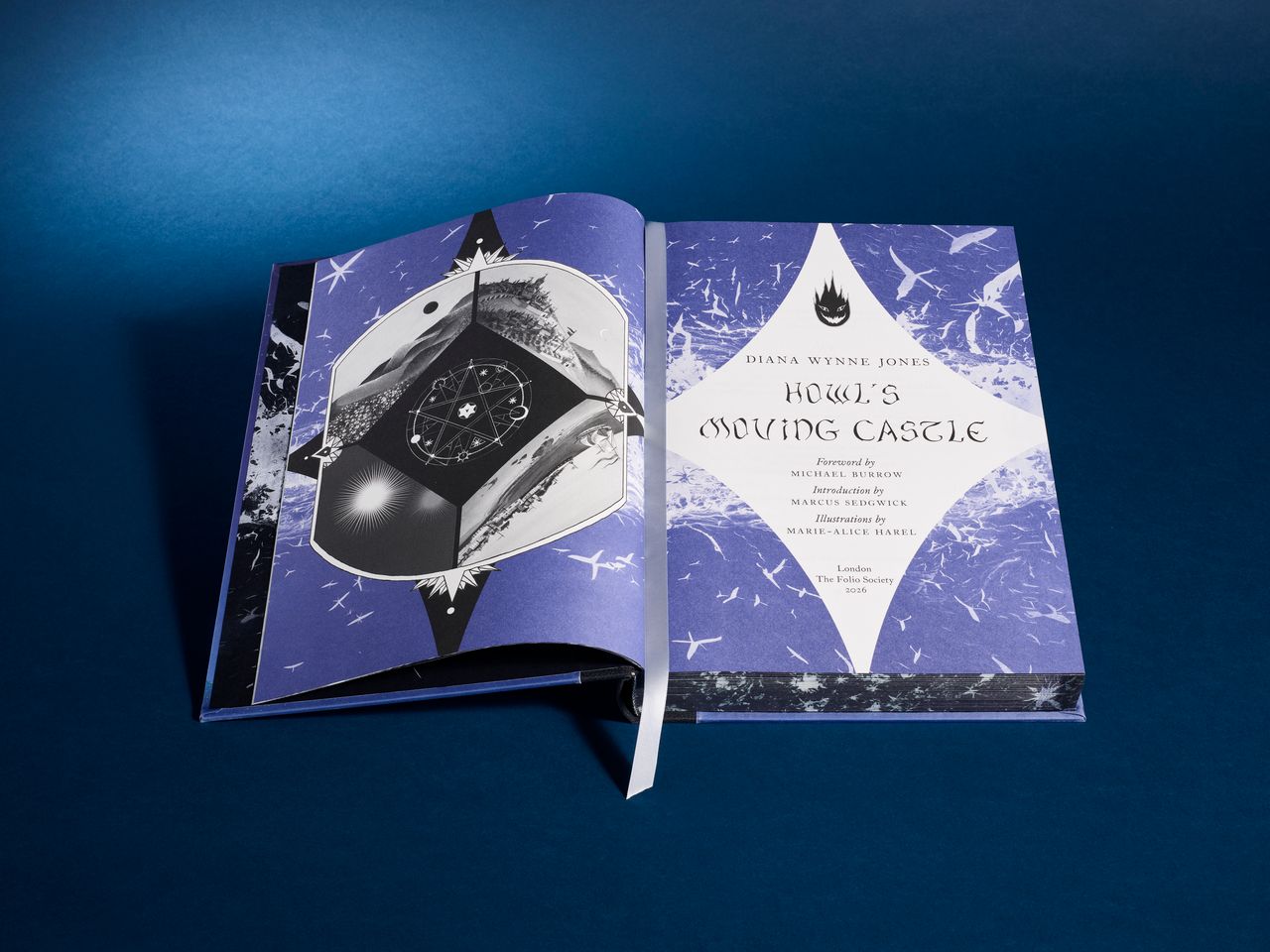
The Folio Society are launching a new edition of the beloved novel to celebrate its long-lasting influence in British fantasy writing. It’s set to release on the 24th March 2026 with beautiful artwork by French artist Marie-Alice Harel. The book’s success led to the 2004 film adaptation by Hayao Miyazaki for Japan’s Studio Ghibli, breaking movie records and achieving lasting popularity among children’s films.
Not many people know Diana’s Welsh heritage, and how her time in Wales inspired so many of her books, including Howl’s Moving Castle. From the Welshman, Howell Jenkins, to the Welsh fields described by Diana in the book and its animated visuals in Miyazaki’s film.
I had the pleasure of speaking with James Rose, Head of Editorial at The Folio Society, to discuss more about this new edition and the lasting effects of Diana’s fantasy world.
When you decided to mark the 40th anniversary of Howl’s Moving Castle, what did you feel was the most important part to capture about the book’s spirit in this new edition?
Howl’s Moving Castle has been very important for us; it’s really special. We first did an edition of Howls back in 2019, and it’s proved hugely successful for us. So, when we saw the 40th anniversary coming up, we wanted to do something special. We wanted to celebrate the novel and its 40th anniversary and Diana’s legacy. The thing I always want to capture with any particular Diana Wynne Jones book is the sheer joy of it. There are darker elements to it: there’s the Witch of the Waste and scary moments, but pervading all of it is a deep sense of joy. I think the readers take a lot of joy from it, and I think we really wanted to sort of capture that. So, while doing that, we went to the artist Marie-Alice Harel and sort of almost offered it to her without much prescription. She loves the book, and I wanted her to bring that sense of joy and her sense of love of the characters through in it in a totally new design.
Alicia: It’s a very beautiful design.
It’s lovely, and a lot of what we try to allow our artists and certainly what Marie did very well, is we obviously discuss everything, and I talked to Marie a lot about it, but I wanted to allow the artist to come at the project from their point of view. I tried not to be prescriptive and tell them too much of what exactly I want. I think this is very much the sort of ‘the artist’s edition’ of Howl’s Moving Castle.
Diana Wynne Jones spent time living in Wales; do you think the Welsh elements in the novel informed your editorial thinking about the atmosphere, landscape, or sense of magic in this edition?
We were very much aware of it, and I think Wales is incredibly important to both Diana, but especially to this book, and you did say Howell – Howell Jenkins is Welsh. You got the portal as well, and it opens into two and takes them to modern-day Wales, and it’s incredibly important. Elements of that crept in, and I think it was also really important for us to remember that the majority of it is set in Ingary, a fictional place. So, while elements of Wales creep into it and the design within Ingary, Porthaven and Market Chipping, that has really come from the artists and from the text itself. One thing we were keen to do was have the text printed from Gomer Press, which is in Wales, and we specifically went there for that reason. We really wanted it to be printed by Gomer and to sort of keep that Welsh connection.
Alicia: For Quench Magazine, we had an issue published, and it was based on our Welsh countryside, so I was really taken aback at how familiar the setting of the novel was, and even watching the Japanese anime, the opening scene clearly shows Welsh fields with sheep. I watched the movie when I was young and didn’t realise that it was Wales. I really wanted to take the opportunity and highlight how Wales is featured in the novel and to discuss that in our magazine.
Absolutely, yeah, and Wales has crept up a lot [in Diana’s novels].
Folio editions are what many see as a physical celebration of beloved texts; in what ways do the materials, for example, the leather binding, the map and the extras design elements speak to the themes of travel, borders and shifting identities that run through Howl’s Moving Castle?
Yeah, there is a great degree here of travelling around in the book, and that idea from going place to place sits into towns [that are] beautifully described and the sort of various individuals. One of the things I really wanted to do was the inclusion of a map of Ingary, and from what I know, ours is the only edition to ever have a map, even from any of the other stories – Castle in the Air and The House of Many Ways – those three books that make up the trilogy. This edition is the first one to have a map, and it was a lot of fun coming up with it creatively and creating it just from text references, which was really fun. That was something I really wanted to get right, and Marie did a wonderful job. I went through all three books that are set in Ingary to try and create vaguely the places and the geography that she [Diana] describes when going over sets of mountains. So, I came up with all these things and sent them to Marie, and she created the map, which we then sent out to be approved, and they loved it as well. We created the map, and the map case and also on the front of the box are the four points of the four portals. Then there’s a cut in the box so it’s the first thing you see, those four portals, so that idea that you’re going to be transported somewhere was really important to us.
Alicia: That was a really great addition to the book because it really does help you feel immersed in the story, as it is a fantasy novel, and a lot of readers want to feel like they’re in the story.
Yeah, and I feel maps are wonderful things, and we could’ve put the map within the text and in the papers, but we wanted to do a separate piece. I love the idea of people reading the book and having the map beside them and looking at the two and finding where they’re [the characters] are off to, like where The Waste is. I love the idea that people might be checking where each place is on the map, which is a lot of fun.
From an editorial perspective, what do you think makes Diana Wynne Jones’s voice still feel so contemporary and relevant to readers in 2026?
Her voice. I loved Diana’s voice. Her voice is immediately readable, and the language that she uses is utterly contemporary, and she talks straight to the reader. I absolutely love that. What makes it timely relevant is her timeless nature, and I think it comes through the characters that are utterly everlasting. In this novel, as in all her other novels, are about emotion. It’s about love, friendship and betrayal, and all of these themes are still relevant because everyone goes through these feelings. These themes are remaining. When you look at Sophie and Howl, they’re sort of outsiders and often alone, being judged. The younger generation can find something in that to latch onto. They’ve never been more relevant. The fact that Diana’s fantasy writing is a form of escapism, and everyone needs to have their own escapism, especially the young generation, definitely needs it. Her work is timeless.
If you had to pick one detail in this anniversary edition, an image, a design element, or a piece of accompanying text that best expresses what Howl’s Moving Castle means to Folio, what would it be, and why?
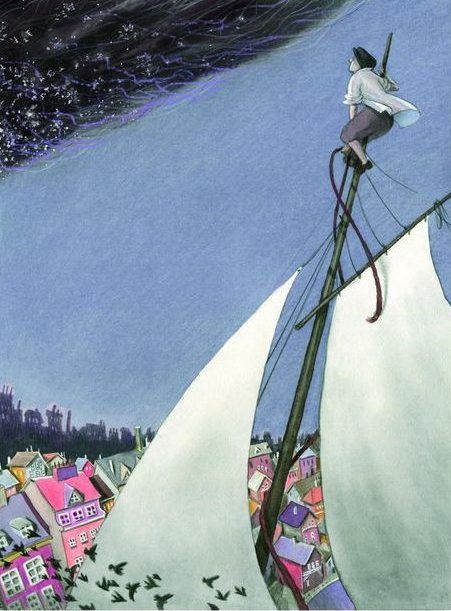
That’s like getting me to choose my favourite child! There’s so much to choose from. The map was really fun to create, and I loved Marie-Alice Harel’s work on the page borders on every page and the frames on the chapter-opening pages. It really reckons with that golden age of illustration and the 19th-century books. When we first worked on this book in 2019, I think we lacked colour pictures of the character Calcifer, and we talked about having him included because I love him and think he’s such a character. I also think the new foreword we have is one of my favourites. When we did an edition of Howls in 2019, it was written by the late Marcus Sedgwick. We thought this time we needed something more personal and more about Diana, so this new foreword we have is written by Michael Burrow, Diana’s son. There are different types of forewords that talk about the book or the legacy of the book, and my favourite ones are the really personal ones. Michael writes about his mum, not just the writer but the woman at home, and who she was. I think you can only get that from someone living with her, and I’m really grateful we got Michael to do it.
Alicia: I love that personal touch. Thank you so much, James, and a big congratulations on the release of the book next month. I’m sure everyone’s going to love it.
Thank you, and I think a lot of people are going to. As you said, there’s a new generation, and I think this is an inter-generational book, you know, like yourself, you saw the movie and saw it as a child, so it’s got a huge fan base. I hope that Diana would’ve approved of this.
Words by Alicia Tariq
Images courtesy of Folio Society