Despite the fact that most men I know in real life are truly genuine and moral people, I can’t help but wonder why the online world does not reflect the same example. In fact, online, there is a growing circle of men that are obsessed with upholding a gym-loving, women-hating, toxic image of masculinity. Personally, I was glad to see that Louis Theroux’s documentary Inside the Manosphere had brought more attention to this issue. Now, more parents are aware of what type of content their adolescent may be engaging with. But I still don’t feel as though Theroux’s documentary entirely solved the mystery of why this toxic male circle came to be.
Having attended a mixed-gendered secondary school, I remember there being a period when teenage boys would collectively degrade teenage girls. They’d joke about all sorts of things: the porn they watched, women’s bodies, and their preference for bigger boobs and bums. I guess none of them could really think for themselves at that stage. But even then the key word here is ‘joke’. Although ill-humoured, they thought it was a joke. And by the time they were old enough to have meaningful relationships with women, they ditched this ignorant sense of humour.
Well, all but some. The online world tells a different story. More and more fully grown men are using their social media platforms to vocally denounce the equality of men and women. They are not joking. Or going through some immature teenage phase. They are genuinely, what I would call, male supremacists. And worst of all, this hatred for women seemingly empowers them.
As shown in Theroux’s documentary, the manosphere is an exclusively male online circle. A male circle that only reserves a space for women that are submissive housewives, sexualised accessories, or vulnerable sex-workers that can be tormented on podcasts. But what about all the other women that make up our society? Perhaps there is another angle to the manosphere that Theroux’s documentary failed to capture.
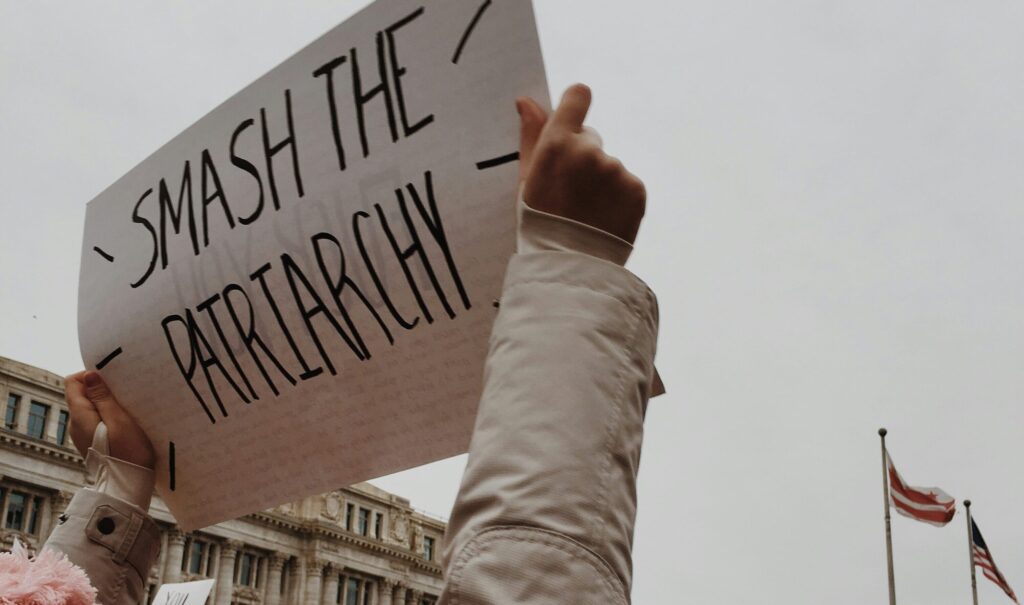
Over a century ago, most women across the globe did not have the right to vote. They also couldn’t own property, handle money, or enter higher education. However, thanks to the development of multiple different feminist movements, all of this has changed. As a female university student, I feel as though I am a part of a group of women who draw power from their education, career ambitions, and aspiration to live life to the fullest. And for any secure man, this equalisation in opportunities for men and women would not be a threat. But what if you’re not a secure man?
Watching Theroux’s documentary, I found myself feeling bad for two young men that were supporters of the manosphere. While a misogynistic worldview had deeply radicalised them, it seemed as though these two young men were fundamentally lonely. Reverting back to out-dated sexist ideologies had empowered them. Blaming their career failure on feminism and successful women got them off the hook. But I felt the biggest issue was how these two young lads had become reliant on an online reality. They had experienced troubles within their own life, were emotionally vulnerable, and had seemingly not received the right support or validation. Maybe it’s hard for some young men to reach out and speak about their issues. Even today, talking about your feelings isn’t exactly deemed masculine.
I think the problem is that patriarchal standards hurt men as well as women. The expectation for a man to remain strong and not talk about his feelings is deeply isolating. With a modern society addicted to doomscrolling, there is already a risk that we can all become detached from one another. For vulnerable young men, it seems that the manosphere has created a trap. As opposed to dealing with emotional struggles and reaching out for support, some young men have found it easier to let a toxic form of online therapy exist them. More specifically, putting women down uplifts them. But I think this problem can change.
As shown in Theroux’s documentary, the manosphere is a seclusively male circle. And this detachment from women, and dependence on an ultra-masculine community, is what makes these men believe their misogyny is okay. They are only exposed to one hateful perspective. However, based off the change I had seen in boys at my school, I think mindsets can change once you get to know another person’s perspective. So I don’t think young male manosphere supporters are truly hateful people. They are men that are lost. They are uncomfortable with their emotions. And they need help realising that the real world will offer them a lot more than one toxic masculine circle.
Words By Alexandra Georges
Feature image courtesy of Philipp Katzenberger via Unsplash. No changes have been made to this image. Image license found here.